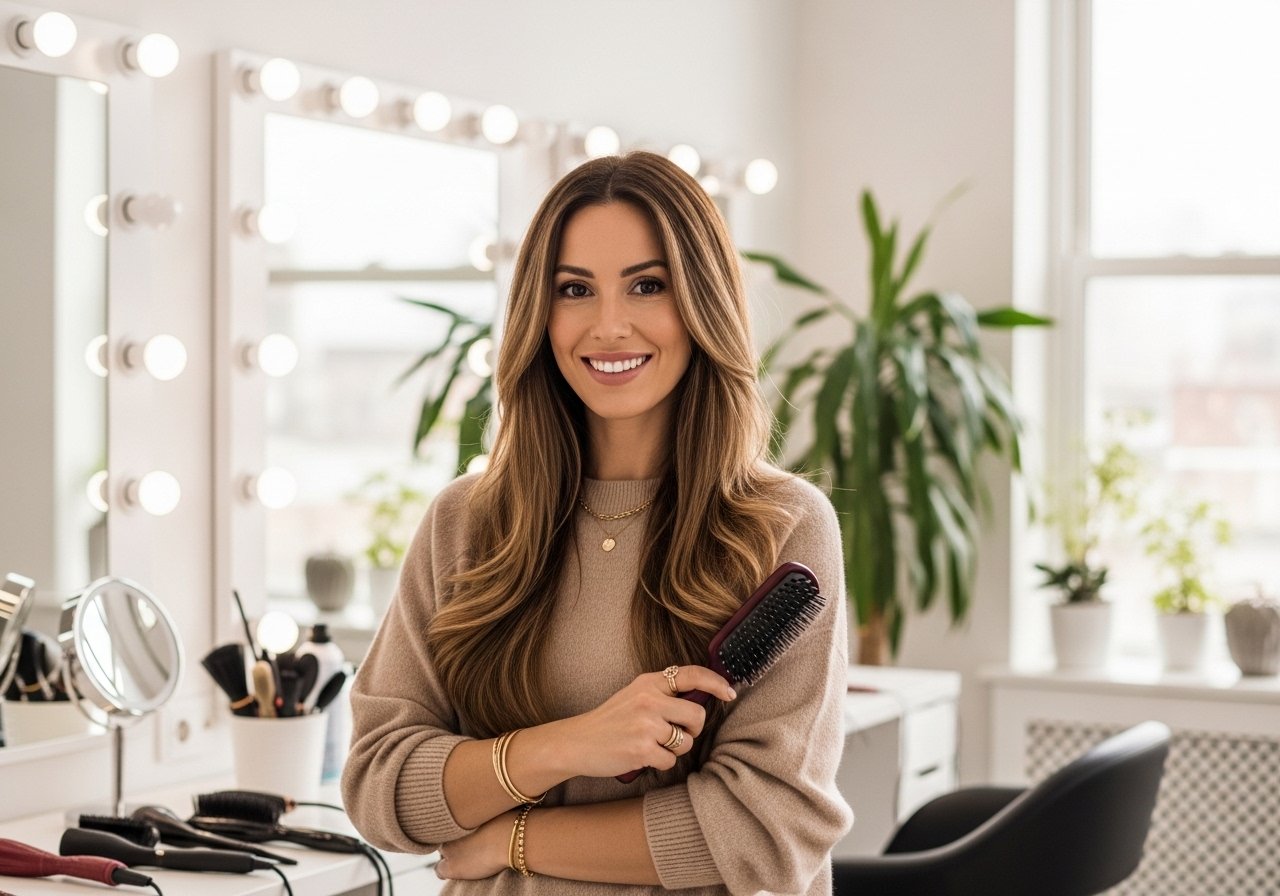
If your curls can look defined right after styling and then go fuzzy and brassy by noon, this is written for you. I have spent way too much time and money learning what actually keeps honey blonde curls looking like a choice and not a regret. Below are 17 real-life ideas with the tech details, product pointers, and upkeep notes that actually work on Type 2C through 4C curls.
These ideas mostly serve medium to thick 2C through 4C curl patterns, shoulder length and longer, with a few gentle tweaks for finer 2A to 3A hair. Expect some salon work for lift, routine at-home care to keep it soft, and a handful of budget picks under $30 alongside a couple of splurges. I flag what needs a pro and what you can try yourself.
Honey Blonde Balayage Painted on Stretched Curls

Balayage on curly hair should be painted with the curl stretched, not springy. When your stylist stretches 10 to 12 sections and paints where the curl will actually sit, the honey tone shows up once the curl shrinks back. This works best for 2C to 3C, medium to thick density, and usually takes 2 to 3 hours in salon because each section needs careful placement. Expect a root-smudge follow-up and a gloss every 8 to 12 weeks to keep warmth. A common mistake is asking for full-head panels, which flattens texture. After color, do a 20-minute deep conditioner in the chair or at home with Briogeo Don't Despair, Repair Mask to stop the ends from feeling like straw.
Thin Ribbon Highlights That Respect the Curl Pattern

Ribbon highlights are tiny, face-framing ribbons that keep the curl pattern visible instead of turning the whole head into one block of blonde. They work well on finer 2B to 3B curls that need brightness without heavy lift. Salon time is moderate, but you can maintain the warmth at home with a mid-priced gloss. A mistake people make is asking for uniform streaks from root to tip, which makes curls look stripy. For upkeep, use a purple shampoo weekly and a gloss every 10 weeks. I pat two pumps of a lightweight leave-in like SheaMoisture Curl Enhancing Smoothie through strands before diffusing to keep the ribbons separated.
Face-Framing Money Piece for Instant Brightening

A front money piece brightens your face fast and gives the camera-ready moment without lightening the whole head. It flatters 2C through 4A curls and is great for bobs to long hair. The catch is that front pieces show damage first, so plan on a bond builder every 4 to 6 weeks. If you are doing this at home, keep the sections small and use 10 to 20 volume developer for short lifts, and always do a patch test for scalp sensitivity. I swipe a tiny bit of Olaplex No. 3 Hair Perfector into the ends once a week and it saved what I thought was gone.
Rooted Honey Melt for Softer Grow-Out

If the idea of touching up every six weeks makes you wince, choose a rooted honey melt. A darker root softens grow-out and hides banding on 3A to 4C hair. Salon time is usually 2 to 3 hours when they add root smudge and gloss. Most people skip the bond-care math and then wonder why the ends look crunchy. My rule: book a bond-repair treatment every 4 to 6 weeks and a gloss every 8 to 12 weeks. Use a purple shampoo weekly, not every wash, or you will dry the honey tones out.
Caramel Layering to Warm the Blonde Without Bleach Overload

Caramel highlights mellow honey blonde so curls read warm instead of overprocessed. This is a safe bet for 3A to 3C hair that dehydrates quickly when lightened. Ask for thin caramel ribbons placed in the mid-lengths and ends and a root smudge to keep the top intact. Weekly deep conditioning and a bond builder like K18 Peptide Prep used per instructions helps the curls hold shape after processing. People who expect instant gloss after every wash are disappointed. Gloss every two to three months, deep condition weekly.
Curtain Bangs That Play Nice With Curls

Curtain bangs and honey blonde are a match when the bangs are cut slightly longer to account for shrinkage on 2C to 3B curls. The trick is a light-hold styling product and a small round brush on low heat if you want them smoothed, or a little leave-in and finger styling for natural texture. Avoid heavy creams that weigh the bangs down and make them separate oddly in humidity. Trim every 8 to 10 weeks and protect with a spray before any warm tool. I spray two quick mists of Color Wow Dream Coat on damp hair before styling to keep frizz at bay.
Shag Cut With Honey Highlights to Reduce Bulk

A shag haircut makes honey blonde reflect more and prevents curls from looking bulky on 2C through 4A hair. Layering lightens visual weight and adds movement. The cut needs a savvy stylist and shaping every 3 to 4 months to avoid awkward volume. For styling, start with a leave-in, then a curl cream and a low-heat diffuser on warm not hot. I swear by a single pump of SheaMoisture Coconut Hibiscus Curl Enhancing Smoothie to define without crunch. Common mistake: too many short layers at the crown that puff out.
What I Keep in My Honey Blonde Curl Kit
- Honestly the smallest list that still keeps color looking good and curls soft. Olaplex No. 3 Hair Perfector 3.3 oz, buy from the official store on Amazon or pick up at Sephora to avoid counterfeits
- K18 Peptide Mask travel size, useful between salon visits
- dpHUE Gloss+ Clear to keep honey tones warm without lift
- Briogeo Don't Despair, Repair Mask 8 oz for weekly deep conditioning
- Microfiber Hair Towel under $15, cuts dry time and frizz
- Diffuser Attachment that fits your dryer, small investment
- Wide-Tooth Comb for detangling wet curls gently
- Color-Safe Purple Shampoo use weekly, not every wash
- Silk Pillowcase Queen to reduce breakage while you sleep
- Light Hold Styling Gel under creams for second-day hold
Honey Blonde on Dark Natural Curls With Minimal Lift

If you have dark curly hair and want honey tones without full-on platinum, ask for selective face frames and mid-length ribbons. This method reduces overall damage because you avoid heavy lift across the entire head. It fits 3B to 4C hair and usually takes multiple sessions if you want significant warmth. The salon will likely use a bond builder in the lightening process and low-volume developer to minimize lift per session. At home, double down on moisture. I use K18 Leave-In Molecular Repair Hair Mask exactly as directed after salon services. Warning: lifting over dark permanent dyes is high risk, book a professional consult.
Gloss Refresh Between Bleaches That Actually Changes Tone

A gloss refresh keeps honey warm and glossy without another bleaching session. It is the cheapest appointment that makes a big visual difference and should be done every 8 to 12 weeks. Gloss is also the best fix for mild brassiness when you do not need lift. For curls, ask for a slightly pigmented gloss to maintain warmth rather than stripping toners. At home, dpHUE Gloss+ lets you refresh between salon visits. A mistake people make is reaching for purple shampoo every wash. Use purple shampoo weekly and rely on gloss for tonal control.
Heatless Honey Waves to Protect Color and Curl

If you like waves but hate heat on lightened ends, try a robe-tie or flexi-rod method on damp hair. Start with a leave-in, section into 8 to 12 pieces depending on density, and wrap each around the tie. Let dry overnight, then gently separate. This is DIY friendly for 2A to 3B hair and keeps honey tones from frying. The common error is starting from soaking wet hair, which gives limp uneven results. A microfiber towel like the one in my kit speeds drying without roughing the cuticle.
Diffusing Low and Slow for Defined Honey Curls
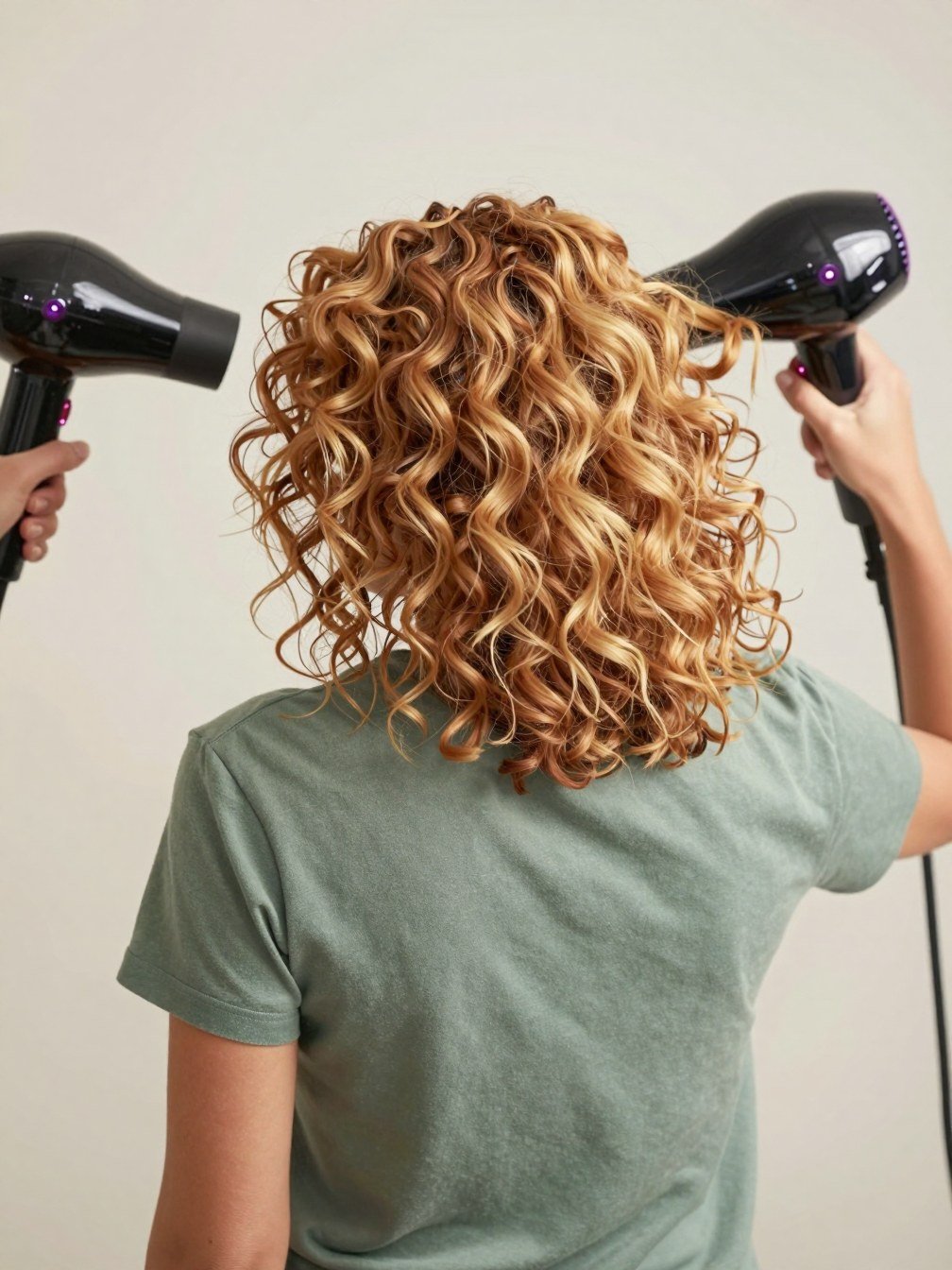
Diffusing is not an on-off switch. Use low heat and medium airflow, cup curls at the ends and move from roots to tips to dry without overheating. For 2C through 4B curls this keeps shape after coloring, because high heat roughs the cuticle and makes honey frizzier. A tip is to pre-dry 60 percent on a microfiber towel, then diffuse for 8 to 12 minutes on each side on low. Mist with a light-hold gel like Eco Styler Light Hold Gel to keep definition without crunch. Skip the diffuser at very high heat.
Deep Side Part to Showcase Color Placement and Lift
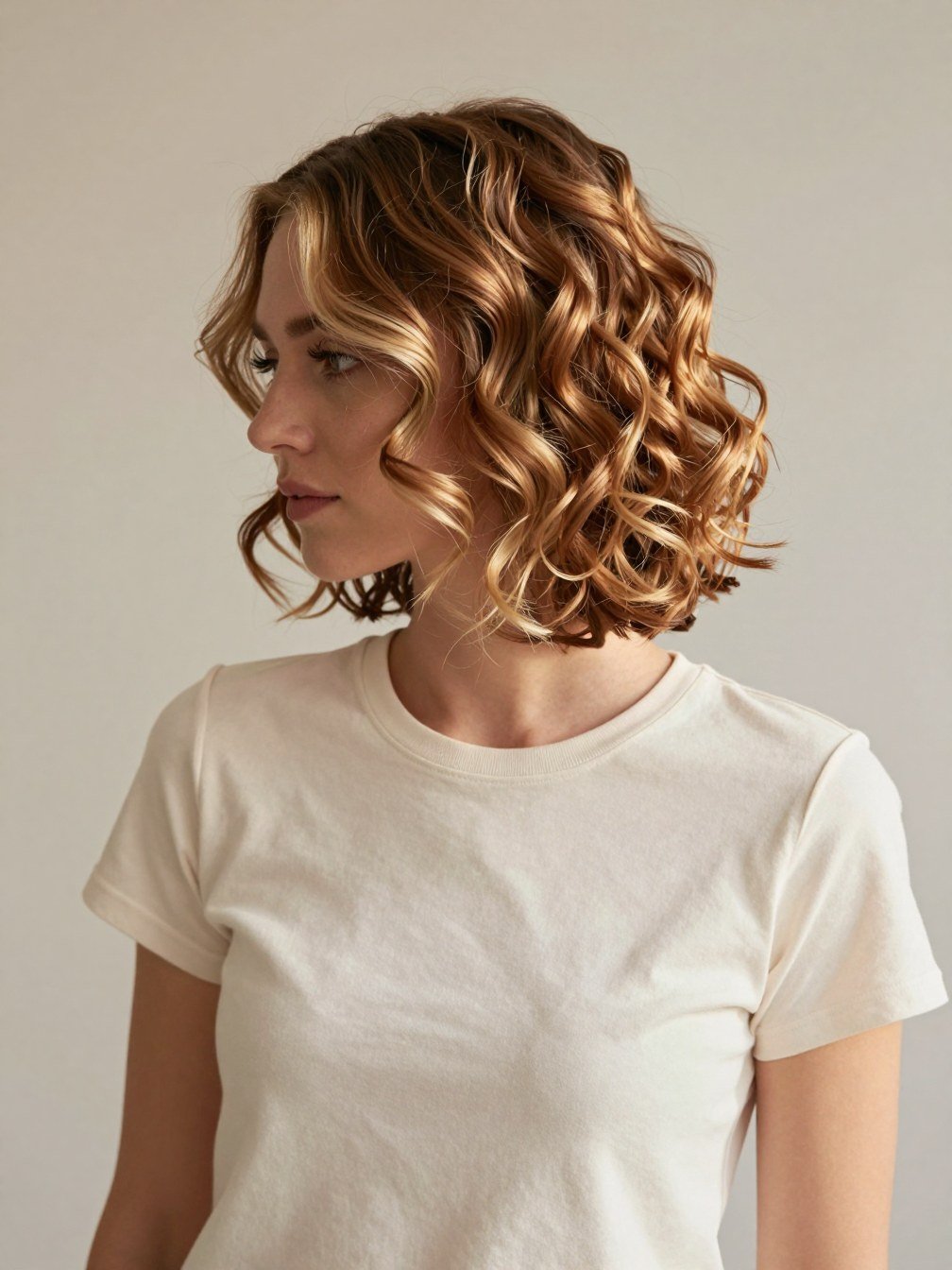
A deep side part gives instant root lift and shows off where highlights live. On 3A to 4A curls it also reduces visible scalp when you want more coverage. This is a styling move you can do at home with a rat-tail comb and a root-lifting mousse. People make the mistake of flattening the part with too much product at the roots, which kills movement. Use a light spray at the root and an airflow lift with a diffuser on low for 30 to 45 seconds at the part before finishing.
Lob Cut With Honey Ends To Avoid Thinned Tips

A lob keeps weight and reduces the chance of ends looking overprocessed, which happens when people lighten long hair too aggressively. For fine to medium 2C to 3B hair, the lob plus honey ends gives brightness without sacrificing density. The cut takes 45 to 60 minutes and a light leave-in and cream keeps texture intact. A common mistake is asking for blunt ends and then bleaching them thin. Tell your stylist you want the ends preserved and a gloss appointment scheduled every 8 weeks.
Soft Face-Framing Pieces for First-Time Blondes

If you want honey but are nervous, face-framing pieces give the impression of blonde without global lift. This works across most curl patterns and is the safest way to try warm honey tones. Keep the sections small, expect a 60 to 90 minute color visit, and schedule a gloss every 10 to 12 weeks. The common misstep is over-highlighting the front which makes the rest look flat. Paired with bond-building care, this approach looks lived-in and grows out nicely.
Bond-Building Routine That Keeps Curly Blonde Soft

Honey blonde curls need bond care more than they need nonstop toner. Use a bond builder like Olaplex or K18 every 3 to 4 weeks after salon services, and supplement with a weekly deep conditioner. For 2B to 4C color-treated curls this routine prevents snap-off and keeps the curl pattern intact. I use Olaplex No. 3 once a week for three months after an intense lift, then every other week. If you see split ends beyond what product can smooth, schedule a trim. Remember, bond builders do not undo past damage, they strengthen the structure moving forward.
Heat Protectant and Tool Notes For Honey Ends

Heat protectant belongs on damp or just-dried hair so it can absorb. For honey blonde ends, that matters more than for natural hair. Use a cream or spray with thermal protection before any tool over 300 Fahrenheit. If you use a tool daily, consider the Dyson Airwrap or a quality iron and beware of counterfeits on big marketplaces. For most people a $30 diffuser and a Color Wow Pop & Lock heat protectant sprayed on damp hair does the job. Common mistake: spraying protectant on hair that is already very dry, which reduces effectiveness.
The Root Touch-Up Rhythm That Stops Panic
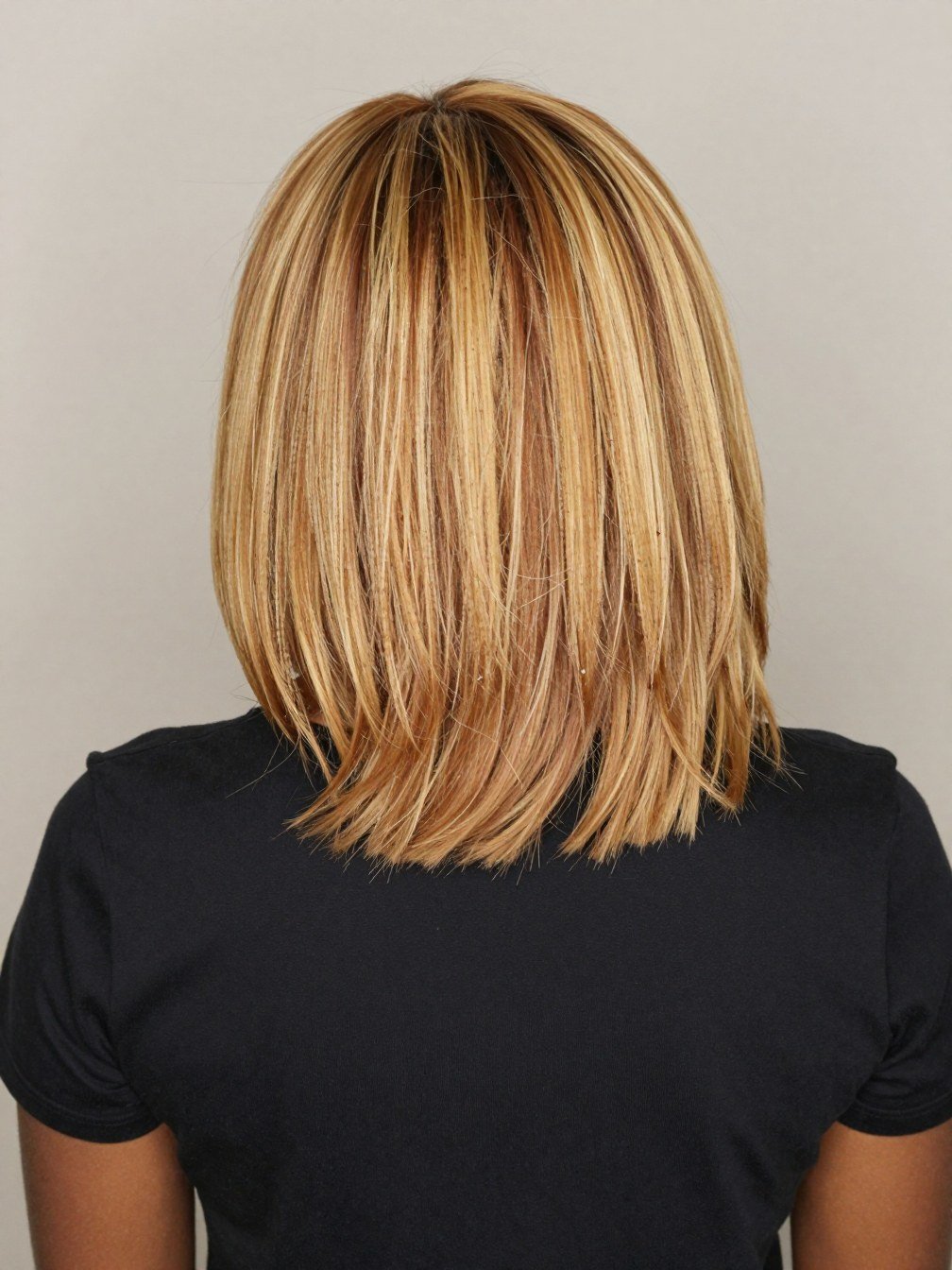
Plan for root touch-ups every 6 to 10 weeks and glosses every 8 to 12 weeks if you want honey to stay warm and not brassy. Curly hair shows roots differently because of shrinkage, so discuss a rooted look with your stylist if you want lower maintenance. The common panic move is booking a color correction the moment you see six-week regrowth. A root smudge and gloss can often bridge you to the next full session. If you spot unexpected scalp sensitivity after a dye, stop and consult a professional.
Night Care That Saves Your Style And Your Color
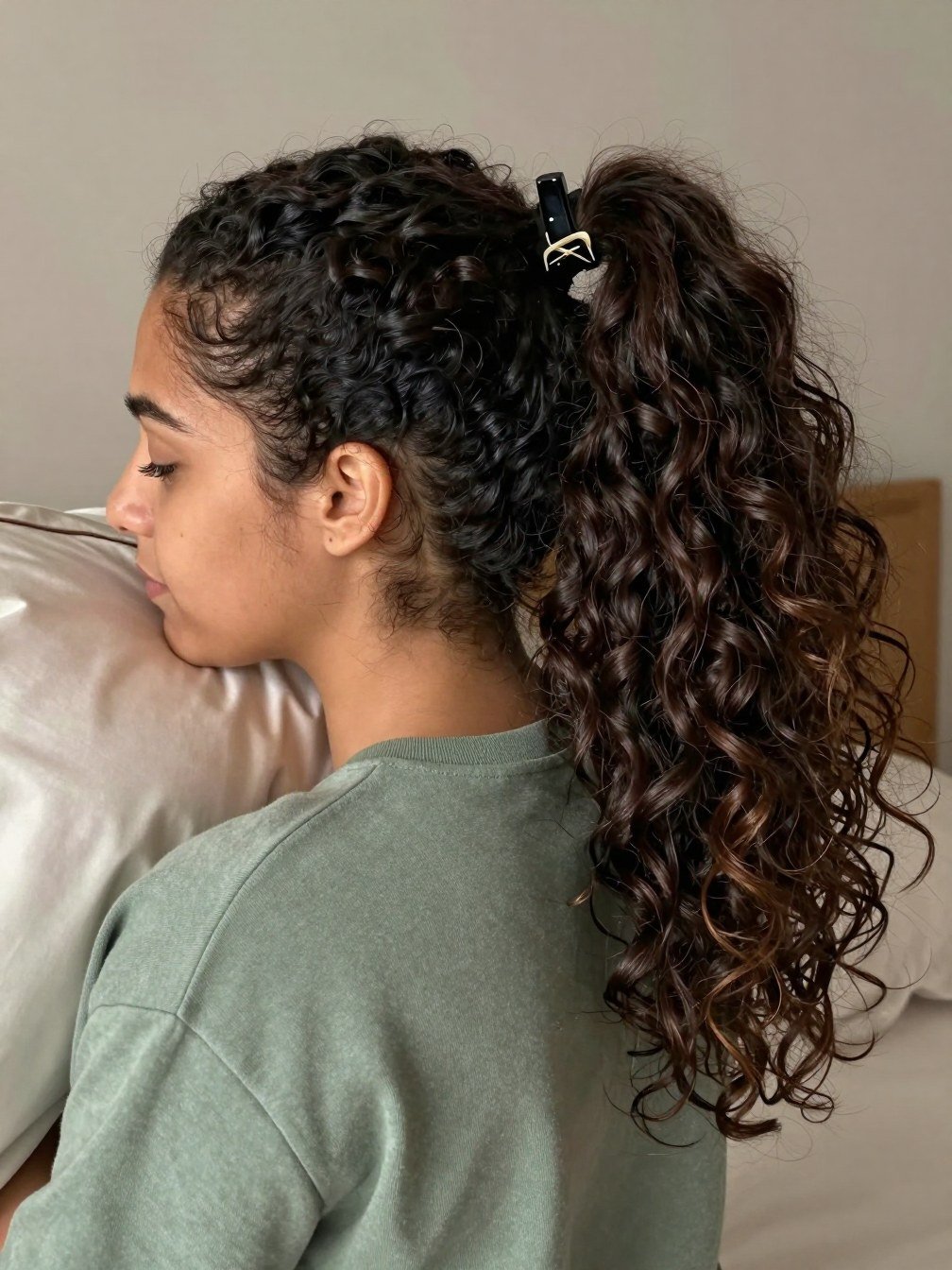
Sleep affects how honey blonde looks by day two. Pineapple the curls loosely at the crown on a silk pillowcase to preserve shape and keep ends from rubbing into a frizz halo. For denser 3B to 4C hair, split into two loose pineapples if the crown misses the hold. The wrong move is wrapping banded tight ponytails which crease and break lightened ends. A silk pillowcase under a satin bonnet is my fail-safe when travel ruins my normal routine.
What I Wish Someone Told Me Before Going Honey Blonde On Curls
- Heat protectant works best on damp hair. Color Wow heat protectant is thin enough to absorb and strong enough for light styling
- Use purple shampoo weekly, not every wash, or it will dry the hair and mute the warmth
- Bond treatments every 4 to 6 weeks are worth more than extra toning appointments
- Diffuse on low heat for shape and to stop the blonde from frizzing
- If you lift over previous dye, see a salon. Kitchen bleach fixes are the most common emergency call I get
- Buy Olaplex, K18, or Dyson from an authorized seller on Amazon or at Sephora/Ulta to avoid fakes
Frequently Asked Questions
Q: How often should I use purple shampoo on honey blonde curls?
A: Once a week is usually enough to manage brass without drying honey tones. If your water is very hard or you live somewhere humid, check with your stylist but avoid daily use.
Q: Can I do a full-head bleach at home if I have 3C or 4A hair?
A: Lifting dark curly hair is a high-risk move. It is safer to book a salon appointment so a pro can blend, limit overlap, and use bond builders during processing.
Q: Will Olaplex No. 3 make my hair feel weird if I am not damaged?
A: No, it will not harm undamaged hair. It strengthens bonds and can add slip. If your hair is fine, use a smaller amount and rinse well to avoid weighing the hair down.
Q: How long does a balayage session take for curly hair?
A: Expect 2 to 3 hours for accurate placement because the stylist will stretch and paint each section so the honey lands where the curl compresses.
Q: My honey blonde goes brassy after three washes. What do I do?
A: Swap to a purple shampoo once a week and add a gloss every 8 to 12 weeks. Also check your water mineral content and use a chelating clarifier monthly if you suspect buildup.
Q: Is the Dyson Airwrap worth it for color-treated curls?
A: If you style daily and have thick hair, it can pay off. If you style twice a week, a good diffuser and a lightweight iron are more cost effective. Buy from the official store to avoid counterfeits.
Q: Can bond builders reverse split ends from lifting?
A: They smooth the appearance and reinforce structure temporarily but they do not replace a trim. If you see actual splits, schedule a small dusting or trim to prevent further breakage.