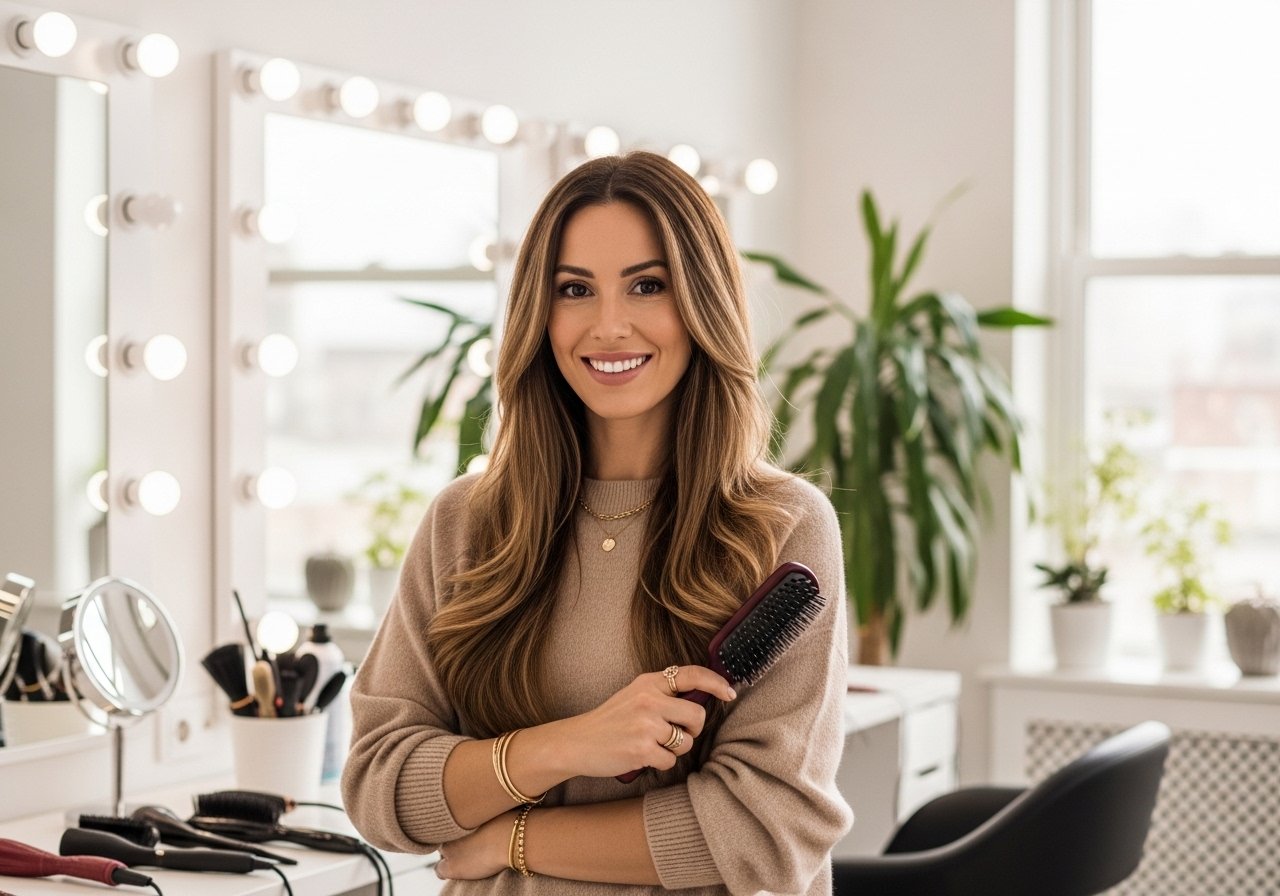
I ruined my first attempt by thinking ash was a toner you slap on and wait for magic. It turned orange, then flat, and the only thing that survived was my frustration. I learned to name the exact shade, respect lift levels, and build in soft roots so the color reads expensive not washed out. No strong 2024 to 2026 stat surfaced in the results shown for this keyword.
This look fits straight to wavy hair best, especially 1A to 2B and fine to medium density. Expect a salon session if you start dark, or a DIY gloss if you are already light. The timing is realistic, not dramatic: gloss refresh every 6 to 8 weeks, with cool tone staying true about 4 to 6 weeks before warmth creeps back. The article should avoid forcing a stat here unless separate verified research is done.
What You'll Need
Styling Products:
- Color-safe shampoo (~$10-20)
- Purple shampoo (~$12-25)
- Heat protectant spray (~$8-20)
Tools:
- Wide-tooth comb (~$5-12)
- Sectioning clips (~$6-15)
- Blow dryer with nozzle (~$30-80)
Treatments & Prep:
- Bond builder treatment (~$20-50)
- Color glossing treatment (~$12-30)
- At-home demi-permanent toner (~$10-25)
Step 1: Pick the exact ash you want
Most people say "ash" and mean different things. Start by choosing a shade name that you and your stylist actually understand, mushroom blonde, smoky ash blonde, dark beige ash, or steel ash. I kept asking for ash and getting muddy brown until I learned the names. Mushroom leans beige and modern, smoky ash reads cooler, and dark beige ash keeps the result wearable on warmer skin tones. Pick one so photos and the colorist are on the same page, and save the mood board that shows depth and undertone.
Mistake to Avoid: Ask for "ash" without a photo or a specific shade name.

Step 2: Figure the lift you really need
You want the hair lifted to about level 7 to 8 for dark ash blonde, but true ash blonde usually needs pre-lightening first, often up to level 9, and some sources say as much as 7 levels of lift. If your hair is darker than a level 6, plan for staged lifting and bond support. For a gentle salon tint, some pros use a 1:1:1 mix with 1.9 percent developer and a post-color treatment, then only 10 minutes of processing for a soft tint on already light hair. That trick keeps gloss and tone without extra breakage.
Mistake to Avoid: Trying to get ash on dark hair with a toner alone.

Step 3: Set a shadow root for easier grow-out
I used to skip the shadow root and then hated my two-week regrowth. A soft, slightly darker root blends regrowth and keeps that cool ash from looking flat. This is the step that makes dark ash blonde feel lived-in. Ask for a root melt or soft shadow root where the base is only a shade or two deeper than the mid-lengths. It also lets you keep the cooler mid-lengths and ends toned without constant full-head work.
Mistake to Avoid: Requesting all-over uniform lift if you want low-maintenance grow-out.

Step 4: Tone and lock the ash with a gloss
This is where the muted, smoky feeling appears. Use a demi-permanent ash toner or a gloss after lift to cancel yellow and add sheen. Gloss refresh every 6 to 8 weeks, with cool tone staying true about 4 to 6 weeks before warmth creeps back, so plan touch ups accordingly. For lighter ends that need a cooler tilt, a purple or blue-toned gloss helps. The gloss should feel slick and satiny when it rinses, not crunchy.
Mistake to Avoid: Skipping the gloss because the hair "looks fine" in the chair.

Step 5: Home care that actually preserves ash
Heat and harsh shampoos push ash toward gold. Use a purple shampoo once a week and a sulfate-free color-safe shampoo otherwise. I cut my heat down and used a bond builder treatment weekly when my hair felt brittle. Always apply a heat protectant before styling. Small moves add up, like washing with lukewarm water and patting dry so the mid-lengths keep their cool shine and do not feel rough.
Mistake to Avoid: Overusing purple shampoo to "fix" every wash, which can make hair look flat.

Step 6: Know when to see a pro and when to DIY
If you need more than about seven levels of lift, stop and book a salon appointment for staged lightening and a bond-building system. Balayage or face-framing highlights give ash dimension without full-head bleach. I have tried balayage with a bond-building lightener and it saved my ends. No strong 2024 to 2026 stat surfaced in the results shown for this keyword, so trust the sensory cues: visible breakage, overly porous ends, or a brass that will not neutralize are signs to go pro.
Mistake to Avoid: Bleaching fragile ends at home to "match the picture."

Tone Care Rituals Worth Trying
Daily product swap: Replace harsh shampoo with a color-safe, sulfate-free option, then use purple shampoo once a week to control brass.
Use a bond support treatment: Apply a bond builder treatment on damp hair weekly, leave for the recommended time, rinse, then style.
Weekly gloss: Refresh with a demi-permanent color glossing treatment every 6 to 8 weeks at home if you already have lift.
Cooler water rinse: Finish showers with a cool rinse for 10 to 20 seconds to help seal cuticles and keep the ash feeling smooth.
Heat-light styling: When you do heat, use a heat protectant spray and keep the iron at a medium setting.
Selective highlights: Ask for fine ash highlights or balayage to add movement so the color never reads flat in photos or bad light.
Sporadic salon gloss: Even if you handle day-to-day at home, schedule a professional gloss every 3 to 4 months to refresh depth and health.
Make It Yours
Start with the shade name and the lift plan, not a picture alone. The steps above are the routine I settled into after three messy tries and it saved my ends and sanity. Give yourself one slow salon session or a careful at-home gloss cycle, then keep a simple upkeep loop: purple shampoo, bond care, and a gloss every couple of months. You will get the cool, smoky finish that reads sophisticated and actually lasts.