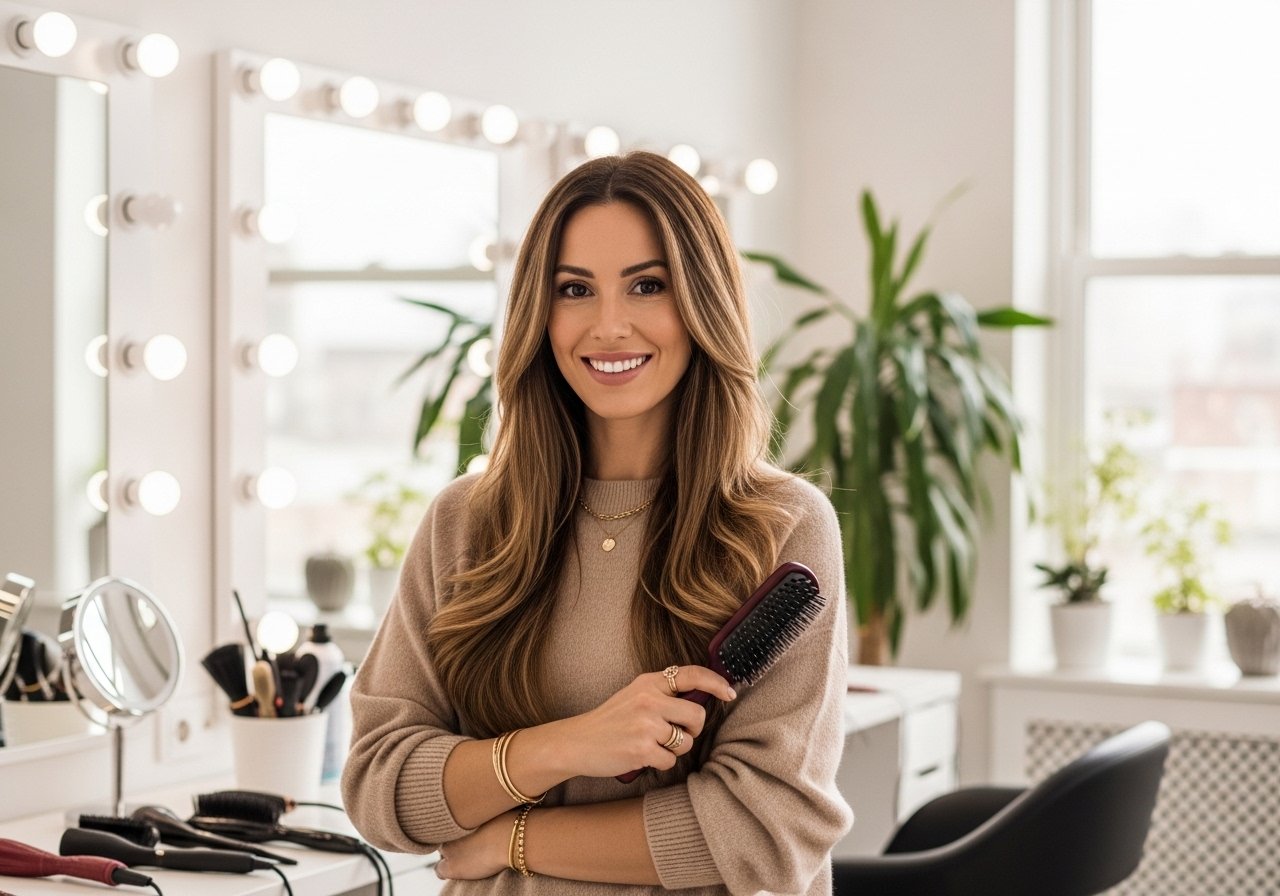
I spent an entire season convinced a single foil packet from the drugstore would give me a warm caramel money piece. It lifted, snapped, and left me begging for Olaplex and patience. After fixing that mess I learned which caramel tones survive fall sweaters and which just go brassy by week two. Below are looks and real-life notes to show your stylist so you get the caramel balayage for fall you actually want.
These picks lean toward fine to medium 1A through 3B hair, shoulder length to mid-back. A few ideas are for thicker textures with small adjustments noted. Expect most looks to cost under $200 at a salon, with one or two splurges for glosses or bond builders. Several are doable at home if you know developer volume and sectioning counts.
Warm Face-Framing Caramel Money Piece

A money piece brightens your face without a full-head lift. For fine to medium straight hair it creates the illusion of depth while keeping overall maintenance low. Ask your stylist for a 1.5 to 2 inch front panel, painted and feathered with 20 volume developer for a subtle lift. Expect a 45 to 60 minute session, more if you want blending through the crown. A common mistake is requesting the exact Instagram photo without mentioning your base level, which leads to a jarring line. If you try this at home, never overlap bleach onto previous highlights and do a patch test for scalp sensitivity.
Low-Maintenance Caramel Babylights With Root Shadow

Babylights give a sun-kissed effect that ages well into fall layers. They work best on 1A to 3A hair and anyone who wants subtle lightening without regrowth panic. Ask for very fine sections, about 1/8 inch, painted and blurred into a root shadow. This is one of the gentlest ways to lift because each foil is thin and processed for 20 to 25 minutes only. Budget wise a salon visit is smarter than DIY here, unless you are comfortable doing dozens of tiny foils. If your hair is porous, request a bond builder in the bowl or a 5 minute glaze afterwards.
Buttery Caramel Balayage With Face-Framing Lowlights

This is my default when I want warmth without going full copper. The lowlights keep the color from bleeding orange under warm studio lights. Works on medium to thick 2A through 3B hair and adds movement for lob to long lengths. Tell your stylist to paint wide strokes with the money-piece area thinner, and to use a glaze for 6 to 10 minutes after processing to tone. Most salons will charge a bit more for lived-in painting techniques, but upkeep is one gloss every 8 to 12 weeks instead of a full retouch. If you blow-dry hot, use a heat protectant before any iron over 300F.
Honeyed Caramel Balayage for Curly Hair

Curly hair needs color placement that honors shrinkage. I tell stylists to avoid lifting the interior root area, instead painting the outer layers so the color shows when curls are down. This fits Type 3A to 4A textures, medium density. The real trick is using a low porosity approach during processing, like gentle heat with a warm towel for 10 minutes so the product penetrates. After coloring, I do a gentle protein-balance deep condition once a week for three weeks using Olaplex No. 3 hair perfector to keep curls springy. If you DIY, avoid overlapping bleach over previous color to prevent breakage.
Dimensional Caramel Balayage on Brunette Bases

If your base is medium to dark brown, ask for both light and deep caramel tones to prevent the banding effect that makes hair look flat. The stylist should use 80/20 product placement, meaning more color at the mid-lengths and ends and less near the root. I had a salon give me single-tone highlights once and the result read flat in photos. This method costs a little more because it uses two tone options and a deliberate painting pattern, but it lasts visually longer. For color care, I alternate a sulfate-free 8oz clarifying shampoo once a month with a moisturizing cleanse to avoid brassiness.
Caramel Balayage With Soft Curtain Framing

Curtain-framing warms up the face for fall scarves. It works for 1A through 2C hair, especially those with layered cuts. Tell your stylist to keep the front paint lighter and feather it back 2 to 3 inches so it reads soft when blown out. A rookie mistake is asking for heavy front highlights which create a stark line. If you style at home, two spritzes of a salt spray through damp hair before diffusing keeps the dimension visible without crunchy texture. If you have high scalp sensitivity, remind the stylist so they can avoid applying bleach directly on the hairline.
Glossed Caramel Finish to Lock Tone

A gloss is the single salon step that makes balayage look intentional and lasts past week two. I book a demi-permanent gloss after nearly every balayage session and it keeps brassy tones at bay for 6 to 8 weeks. You can buy at-home glosses but watch for duration instructions, most say 5 to 15 minutes. For fragile hair ask the stylist for a 6 minute glaze rather than 15. If you buy on Amazon grab a brand sold through the official store or pick it up at Ulta to avoid fakes. Glosses do not lift color, they only add tone and shine.
What I Pack For A Caramel Balayage Appointment
- I always bring a photo and a short note on my current routine and last chemical service.
- Olaplex No. 3 hair perfector 3.3 oz, used weekly to keep processed sections from feeling brittle, buy from the official store on Amazon or Sephora to avoid counterfeits.
- Color-safe sulfate-free shampoo 8oz for daily washing when I am traveling.
- Purple shampoo 8oz for once-weekly tone correction if my blonde starts to go brassy. Use sparingly.
- Silk pillowcase queen under $30, it reduces friction and keeps color glossier.
- Heat protectant spray to use before any styling heat. Remember, most heat protectants you spray on dry hair before flat ironing barely work. They need to absorb into damp or just-dried hair to actually shield the cuticle.
- Boar bristle paddle brush for smoothing during blowouts.
- Wide tooth comb to detangle wet colored hair gently.
- Bond builder at-home kit for extra reinforcement between salon visits.
- Leave-in conditioner 6oz with lightweight slip for daily protection.
Face-Framing Caramel Pieces For Short Hair

Short hair benefits from minimal placement. On a bob ask for pieces that start 1 to 2 inches from the root so the color shows without a stark line at the root. This suits 1A to 2B textures with medium density. My stylist once painted too-low pieces on my bob and the effect looked like a stripe when straightened. Maintenance is low, a glaze every 6 to 8 weeks keeps the look fresh. If you try at home, use foil-free balayage paint and process in 5 to 10 minute increments checking lift often to avoid overprocessing.
Caramel Melt for Greying Hair Blending

If you are blending greys, a caramel melt uses low-contrast warmth to take the edge off silver strands. It works on fine to medium texture and is kinder than all-over color. Ask for a demi-permanent gloss with warm caramel tones processed for 6 to 10 minutes, so grey coverage is subtle. I helped a friend with this and we avoided a heavy single-tone dye that made her look flat. Expect touch-ups every 10 to 12 weeks. For scalp sensitivity choose a product with lower ammonia or a gloss formula.
Caramel Balayage With Face-Lift Highlights For Round Faces

Strategic highlight placement can slim a round face. Brighter caramel pieces at the temples and cheekbones pull the eye upward. This is great for 1A to 2C hair and helps long bobs read more angular. Tell the stylist you want the brightness focused on the upper third of the face and blended back 2 to 3 inches. Avoid asking for a full halo of brightness which can widen the face. If you style with a curling iron, keep the barrel size at 1 to 1.25 inches and avoid higher than 350F to reduce damage.
Caramel Balayage Grown-Out Look For Busy Schedules

If you hate salon runs, ask for painting that starts farther from the root and a darker toner on the ends so it grows out into a lived-in look. This suits medium to thick 1B through 3A hair. I did this before a travel-heavy semester and went six months between appointments. The trick is to tone the ends slightly cooler to prevent weekend brass, and then use a gloss at home every 8 to 10 weeks. A common mistake is asking for "low maintenance" without specifying how many months you want it to last.
Brassy-Proof Caramel For Red Undertones

Some caramel formulas push red. If your natural base has red undertones, request an ash-neutralizing glaze post-lightening. I once ended up with orange halo hair because my stylist missed that note. Ask for a cooler caramel with 1 to 2 percent ash, and use a purple shampoo once a week if brass appears. If you are sensitive to high-acid toners, patch test and keep processing short. For home toning, dilute purple shampoo with conditioner to avoid over-drying.
Layered Caramel Balayage For Volume Illusion

Paint lighter pieces around layers to create depth that looks like volume. This is excellent for fine hair, 1A through 2B, because the contrast tricks the eye. Ask the stylist to paint vertical sections and leave the top crown a touch darker. In styling, a root-lift spray and a quick burst of cool air at the roots after blow-drying helps the effect last. Avoid chunky highlights on fine hair or it will read sparse. If you use a volumizing mousse, apply mostly at the roots and not through the ends to keep the mid-length color from feeling heavy.
Subtle Caramel Babylights For Heatless Styling

Babylights play beautifully with heatless wave methods. I sleep in a robe tie and wake up with soft movement that shows the color dimension. This pairs well with Type 2B to 3B hair. The maintenance is minimal, and the color reads softer than chunky highlights. One common error is using heavy oils right after coloring, which can weigh down the delicate babylight sections. For styling try a microfiber towel overnight and two pumps of leave-in before tying. If you are processing hair at home, remember higher developers like 30 volume give faster lift but also raise breakage risk.
Caramel Balayage With Face-Framing Blond Money Piece For Fair Skin

Fair skin can handle brighter face-framing pieces that act almost like a highlight without full bleach. Ask for a cooler blonded caramel so it does not look too warm against your complexion. This look works for 1A to 2B hair. I once asked for warm honey on fair skin and ended up washed out. Tone choice matters. Keep a glaze schedule of every 6 to 8 weeks and use a leave-in with SPF if you spend a lot of time outdoors. If you try this at home, use small sections and check lift every 5 to 10 minutes.
Deep Caramel Balayage For Dark Hair That Reads Natural

For very dark bases, deep caramel avoids the banding that can happen with high-contrast lifts. Stylists often use a glaze to melt tones and a lower developer to avoid brass. This is ideal for medium density 1B to 2B hair. I had a friend who went too light and it looked patchy against her natural dark root. The safer route is a staged lift over two sessions, spaced six weeks apart. If you heat-style daily, commit to a solid protectant routine and a weekly bond treatment.
Caramel Balayage With Root Tap For Busy Color Wearers

Root tapping blends the root to the balayage so regrowth looks intentional. This method suits those who go long between appointments or want low upkeep. Ask the stylist to hand-paint the root tap and to keep the first 1/2 to 1 inch darker. I left a salon once with a harsh regrowth line because they skipped this step. Root taps can be done as a quick 20 minute touch and will save you trips. If you are dyeing at home, avoid overlapping and use a demi color for the root tap to keep it soft.
Caramel Balayage With Glossy Protection For Heat Styling

If you style with heat often, a gloss plus a heat protectant is non-negotiable. I learned the hard way after a single hot session on wet hair that you must always use a protectant and never iron over 300F without it. Use a gloss treatment every 6 weeks for color and shine and a lightweight leave-in before styling. For irons, I aim for 320 to 350F on medium hair. If your hair is thin, lower the temperature. Bond builders help when you are styling frequently between color appointments.
The Monthly Touch-Up Plan That Actually Works

If you want your caramel balayage to still look fresh in month four, plan maintenance before the color fades. My effective routine is a salon gloss at week six, a bond builder at week eight, and a pale purple shampoo session once every two weeks only if brass starts. Hair grows about half an inch a month at most, regardless of what biotin gummies promise you. That means strategic maintenance beats trying to correct a faded color later. Keep an at-home gloss handy for between-salon emergencies and always buy Olaplex and similar premium products from official sellers.
How I Keep My Caramel Balayage From Fading

First, wash less. I know that sounds basic but overwashing is the fastest way to drain a fresh balayage. Use cool to lukewarm water and a color-safe sulfate-free shampoo. I also time my glosses, leaving them for 6 to 8 minutes depending on the instruction, never longer. If you swim, use a barrier product or a swim cap because chlorine strips tone quickly. For a daytime boost, a spritz of anti-humidity spray keeps color looking smudge-free through fall humidity spikes. If you have scalp sensitivity, patch test toners and avoid high-acid products.
The Mistakes I Made So You Don’t Repeat Them
- Too much developer while trying to rush lift. Lifting over previous color can cause breakage. Book a color correction instead of trying it in the kitchen.
- Skipping a glaze. That instant 6 to 10 minute step prevents a lot of brassy surprises.
- Ignoring porosity. Low porosity needs warmth for product absorption, high porosity needs protein balance.
- Flat photos lie. Ask for a natural light photo before you leave the chair so you can see how tones read.
Frequently Asked Questions
Q: How often should I salon gloss my caramel balayage?
A: Every 6 to 10 weeks based on how warm your tone drifts. If you see brass by week two or three, ask your stylist for a cooler glaze the next time. Glosses do not lift color, they only tone and add sheen.
Q: Can I bleach my dark base at home to get caramel balayage?
A: Lifting over dark or previously colored hair is risky at home. This is the single most common reason hair breaks off in the shower. Book a salon correction if you want to go several shades lighter.
Q: Will a bond builder fix my over-processed ends?
A: Bond builders strengthen and temporarily reduce breakage, but they do not reverse damage history. They help manage texture so you can style without shedding chunks, and I use one once every two weeks between salon visits.
Q: How often should I use purple shampoo with caramel tones?
A: Once a week at most, mixed with conditioner if you start with dry or brittle hair. Overuse can dry out ends and mute warm caramel tones you may actually want.
Q: Can I get a money piece if I have curly hair?
A: Yes. Curly textures show money pieces differently. Ask the stylist to place lighter sections on the outer layers not the scalp area so the pieces show when hair is down, and remember curls shrink so plan placement accordingly.
Q: Is it okay to apply heat protectant on dry hair before flat ironing?
A: Most heat protectants you spray on dry hair before flat ironing barely work. They need to absorb into damp or just-dried hair to actually shield the cuticle. Apply to damp hair, let it set for a minute, then dry and style.
Q: How do I prevent my caramel balayage from going brassy in the fall?
A: Use a color-safe sulfate-free shampoo, limit washes, add a glaze every 6 to 8 weeks, and use a purple shampoo only when brass appears. Also avoid high-heat styling without protection and buy trusted products from official sellers to avoid counterfeits.