I chopped my own bangs once and paid a stylist $120 to fix the uneven pieces a week later. If you want short bobs on Black women that actually behave in real life, not just in studio photos, these ideas are for textured 2A through 4C hair, shoulder-length to chin-length. Most looks here can be handled at home with some practice, a $30 tool, and occasional salon shaping. Budget ranges from drugstore buys under $15 to one or two splurges around $200 for tools or bond treatments.
Blunt Short Bob With Micro Bangs For 3B To 4A Hair
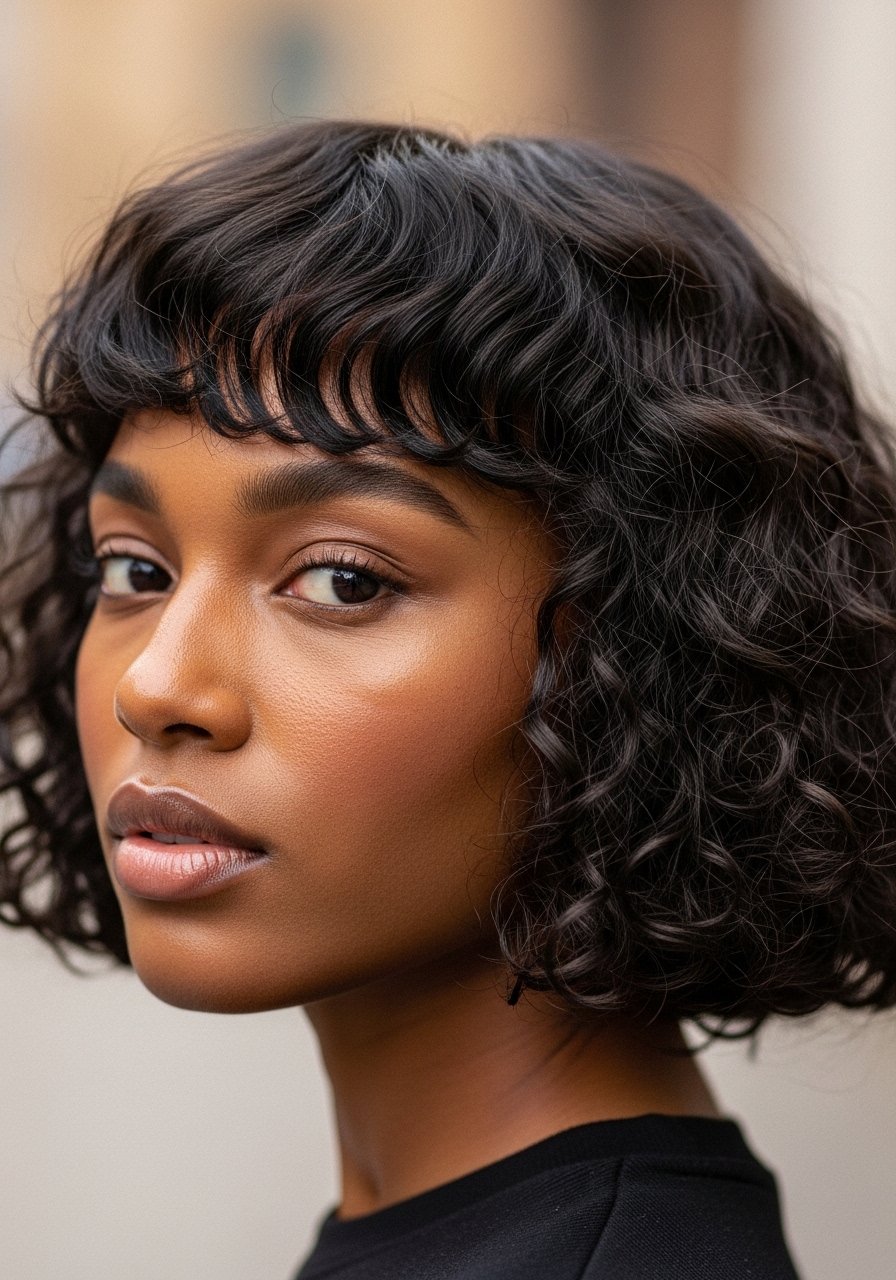
I wanted a clean edge without the weight of long bangs. A blunt bob with micro bangs gives that graphic silhouette while letting coils spring underneath. For 3B to 4A hair, cut the bangs at dry length, trimming 1/4 inch at a time since shrinkage is real. I smooth the bang section with a small bit of leave-in, about a dime size of cream, then a pea size of curl-defining gel to avoid crunchy thickness. A half-inch flat iron pass at 320F tames frizz for photos, but always spray a heat protectant on damp hair first when you plan to use any iron over 300F. Salon shaping every 6 to 8 weeks keeps the line sharp.
Asymmetrical Side-Swept Bob With Long Bangs For Oval Faces
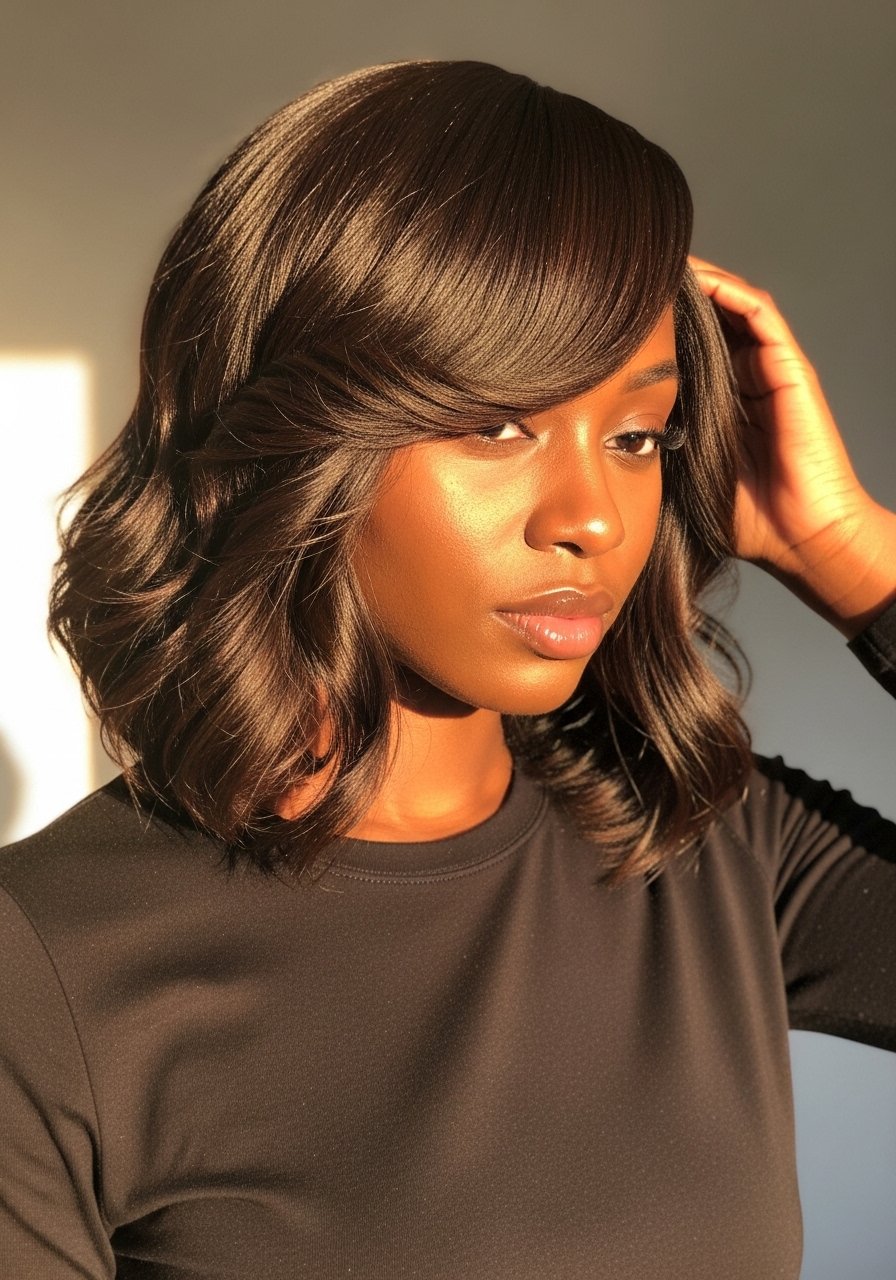
If you want a bob that hides a wide forehead, asymmetry plus long bangs is the trick. It suits oval faces and fine to medium density 2A through 3B textures because the longer side adds weight and movement. I section the hair into five pieces for blow drying, using medium heat and a round brush on each 1.5 inch section for smoother control. For hold without stiffness, I mist a lightweight hairspray with two short sprays from 8 to 10 inches away. Common mistake, over-layering the bangs which creates a gap at the forehead. Ask your stylist for face-framing layers only, not too many internal layers.
Chin-Length Bob With Curtain Bangs For 2C Waves
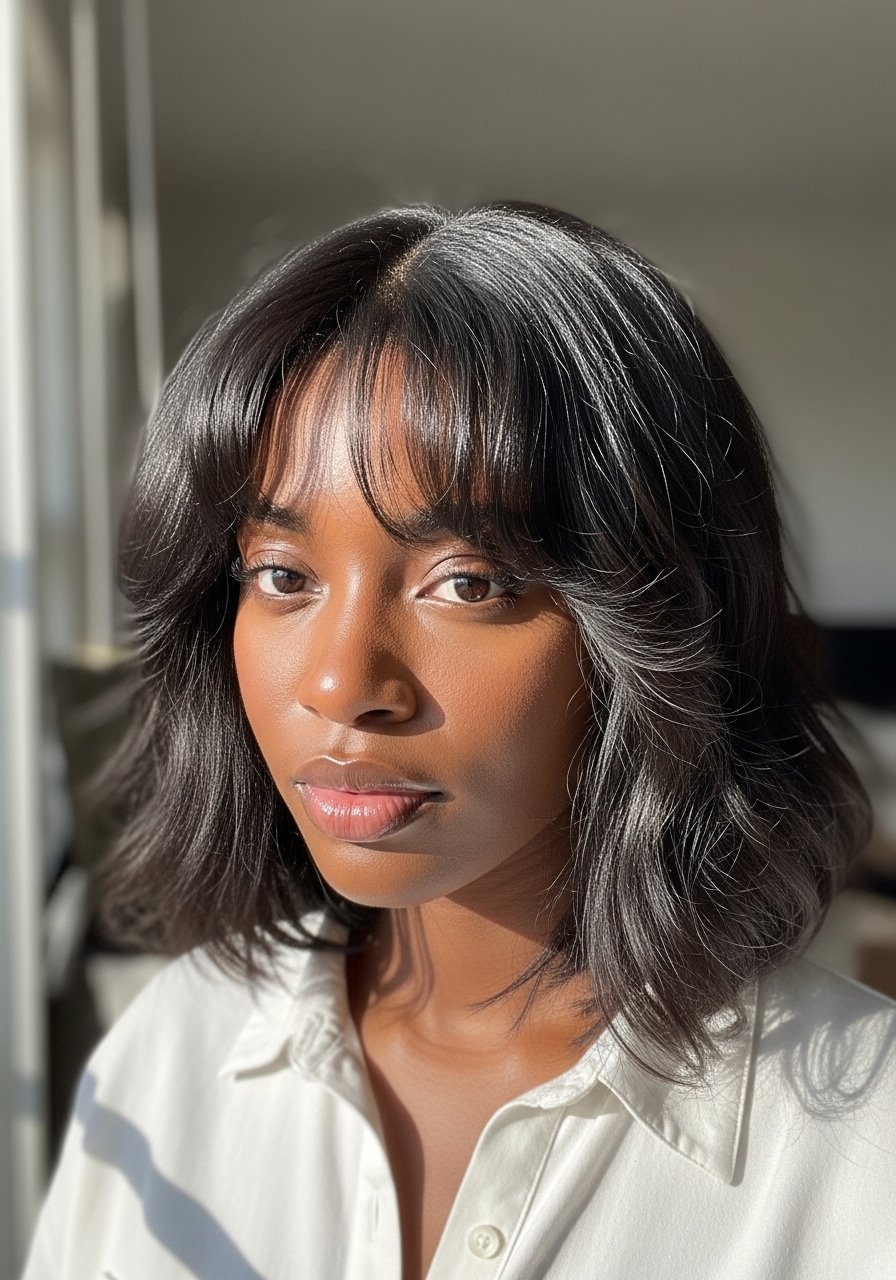
Curtain bangs are forgiving when they are cut a touch longer than you think. On 2C waves I cut them to eyebrow length damp, then let them air-dry and trim again, because waves shorten. I like two pumps of a leave-in cream on damp hair, then a single spritz of sea salt spray from mid-length to ends for separation. If your bangs get greasy fast, wash just the front section once every other day rather than shampooing the whole head to keep the rest fresh. This look takes about 15 to 25 minutes styling time in the morning once you settle on your routine.
Stacked Bob For Thick 4A To 4C Hair That Keeps Shape
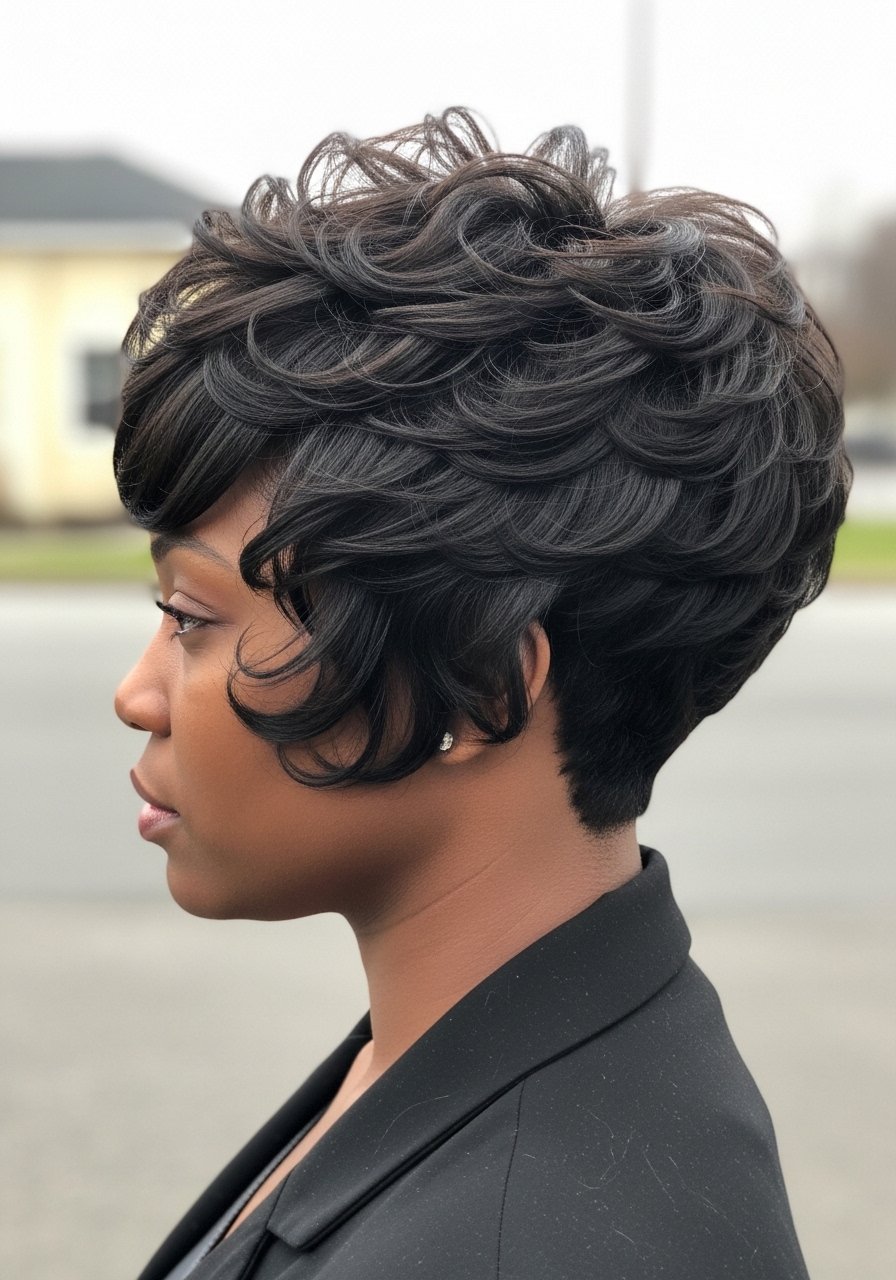
Thick coils need structure or they go triangular in one wash. A stacked bob gives lift at the crown and keeps the silhouette balanced. Ask for graduation at the nape and longer front pieces. When styling at home, I detangle in small 1-inch sections with a wide-tooth comb using a quarter-dollar amount of leave-in per section. For definition, the LOC method works: leave-in, cream, then a light oil to seal. Avoid heavy gels that flatten coils and make the bob look bulky. Salon note, cutting tight coils is best when hair is dry so the shape is accurate.
Soft A-Line Bob With Wispy Bangs For Fine 3A Hair

Fine 3A hair can look thin in a blunt bob. An A-line cut keeps weight forward while wispy bangs add movement and cover a high hairline. When I blow dry, I work 1-inch sections on medium heat and finish with a blast of cool air to set the shape. A volumizing mousse applied at the roots while damp, about a nickel-sized amount per side, gives lift without crunchy residue. The common mistake is over-texturizing the ends at the salon, which creates holes. Tell your stylist you want soft texturizing, not razor-chopped feathering.
Sleek Bob With Blunt Bangs For Straightened 2A To 2B Hair
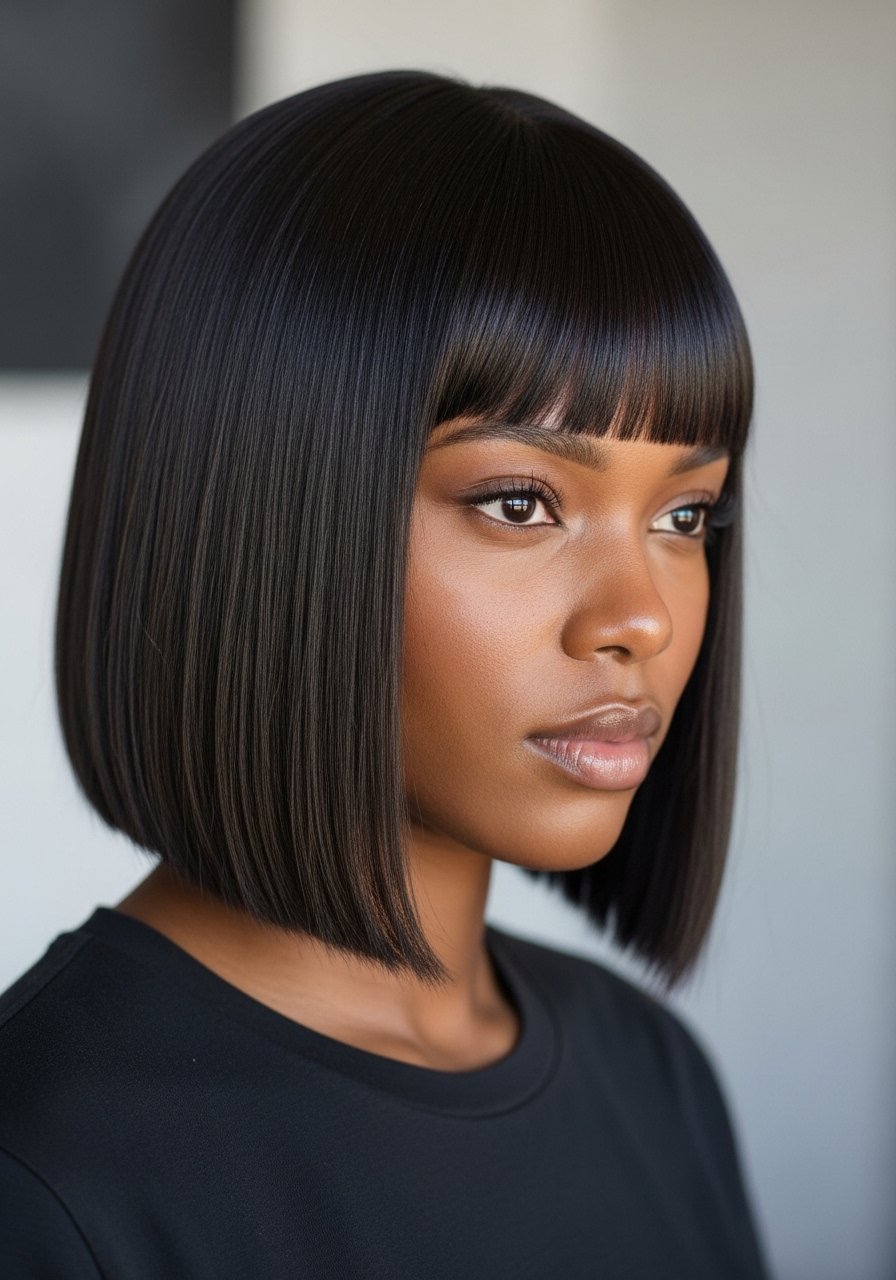
This is the look I booked for a wedding and then realized I could recreate it without a salon if I plan ahead. Start with a smooth blow-dry on damp hair using a medium heat setting and a paddle brush. Use a flat iron at 350F in one smooth pass for each 1-inch section, but remember to apply a heat protectant to damp or just-dried hair before any iron over 300F. To keep the bangs from oiling up by midday, I wash the front fringe twice a week and spot-clean with dry shampoo between washes. If you color your bangs, do an allergy patch test first and avoid home bleaching over previous dye.
Shaggy Bob With Piecey Bangs For Round Faces
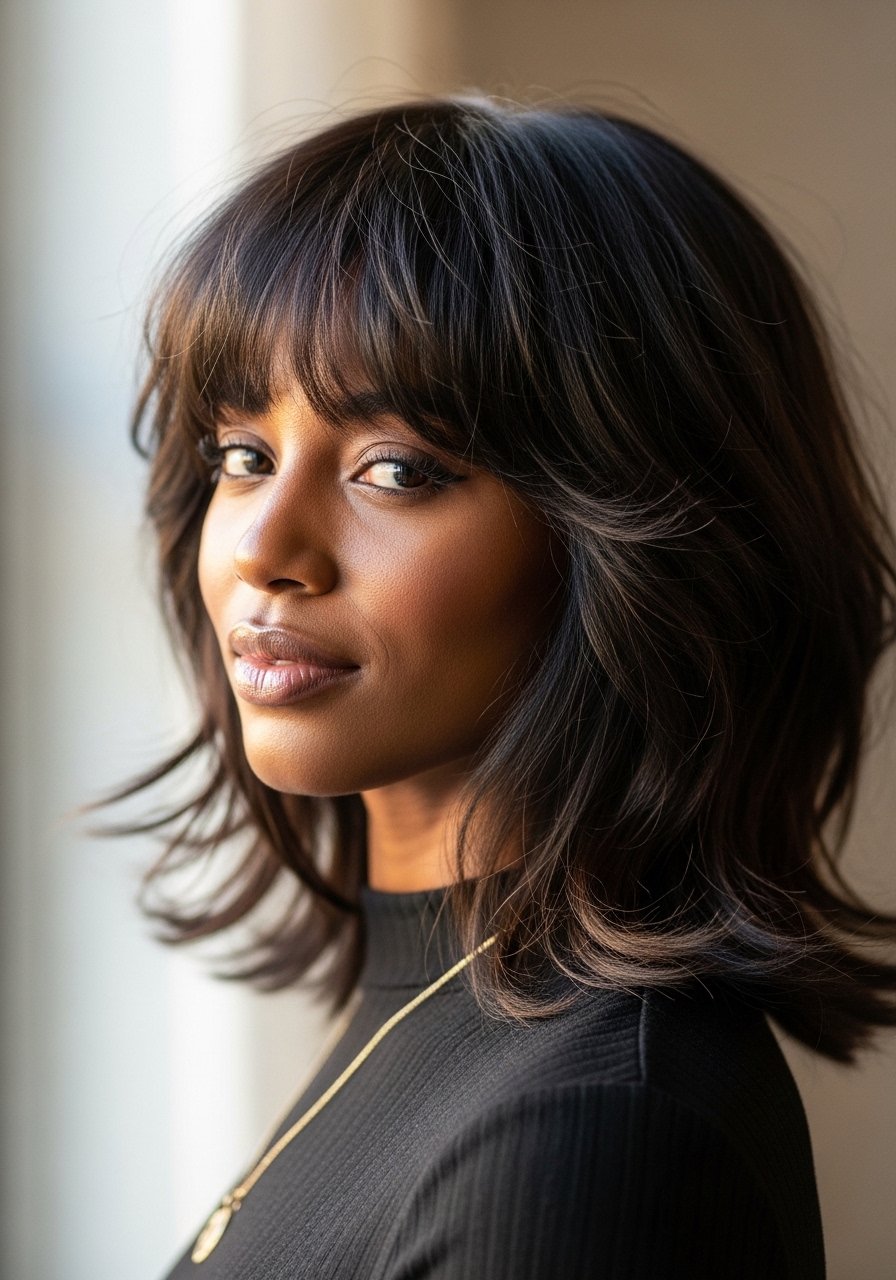
The shaggy bob is forgiving and adds movement that slims a round face. Piecey bangs cut at varying lengths create texture without the heavy helmet feel. I ask for razor texturing but the stylist leaves enough weight so the hair doesn’t puff out. To style, I scrunch in a pea-sized amount of curl cream at the back and a dab more at the bangs to keep them defined. If you over-apply product at the crown you lose lift, so work from the back forward. This look tolerates second-day hair well, which saves time and reduces heat use.
What I Actually Pack For A Bob With Bangs
- I keep a travel set for touch-ups, not a full kit. A small boar bristle brush to smooth bangs without flattening the roots.
- For morning frizz, a 3oz anti-humidity spray that I mist from 12 inches away.
- For home trims, scissors are not enough. A barber thinning shear set keeps fringe soft when I follow my stylist’s instructions.
- A silk pillowcase queen size cut my morning frizz in half within a week of switching.
- For heat styling, a reliable flat iron under $150 that reaches consistent temps is worth the spend.
- Olaplex No. 3 hair perfector once a week helps with split ends looking sealed. Buy from the official store on Amazon or Sephora to avoid counterfeits.
- A mini wide-tooth comb for quick detangling in the shower.
- Dry shampoo stick fits in my bag for greasy bangs between washes.
- A small heat protectant spray for any iron work, applied to damp hair.
- A satin hair scarf for tying bangs flat when I sleep on travel nights.
Chin-Grazing Bob With Wispy Bangs For Petite Frames
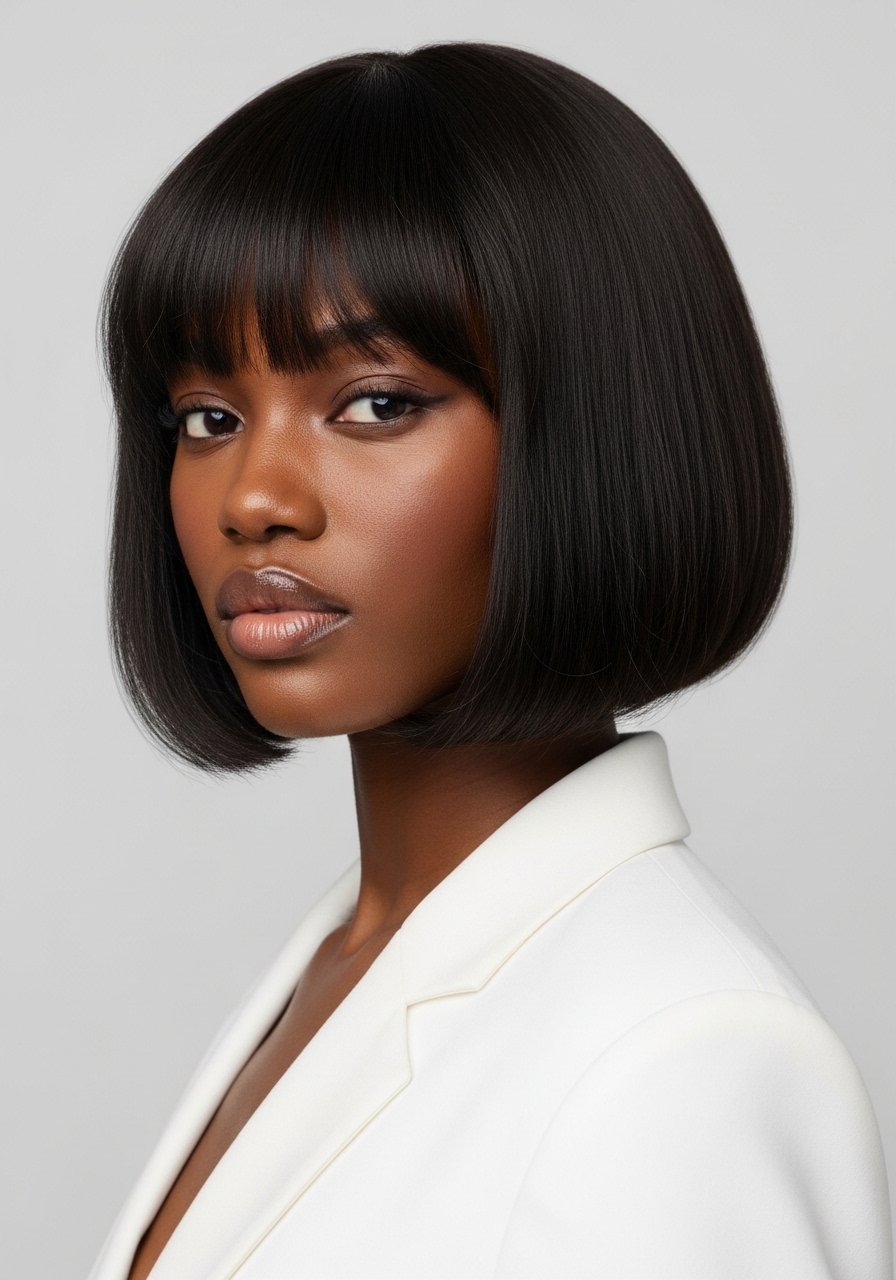
For petite frames, length matters. A chin-grazing bob visually lengthens the neck without overwhelming your proportions. Wispy bangs kept longer at the sides help the face look balanced. I blow-dry bangs with a small round brush working from root to tip in 1-inch sections, then finish with one spritz of flexible-hold spray to avoid stiffness. If your hair is fragile from color, use a bond builder like this weekly treatment and expect to wait a few applications to notice smoother ends. Safety note, never lift color at home over previous dye without a salon consult.
Textured Bob With Bangs For Type 4C; No Heat Method
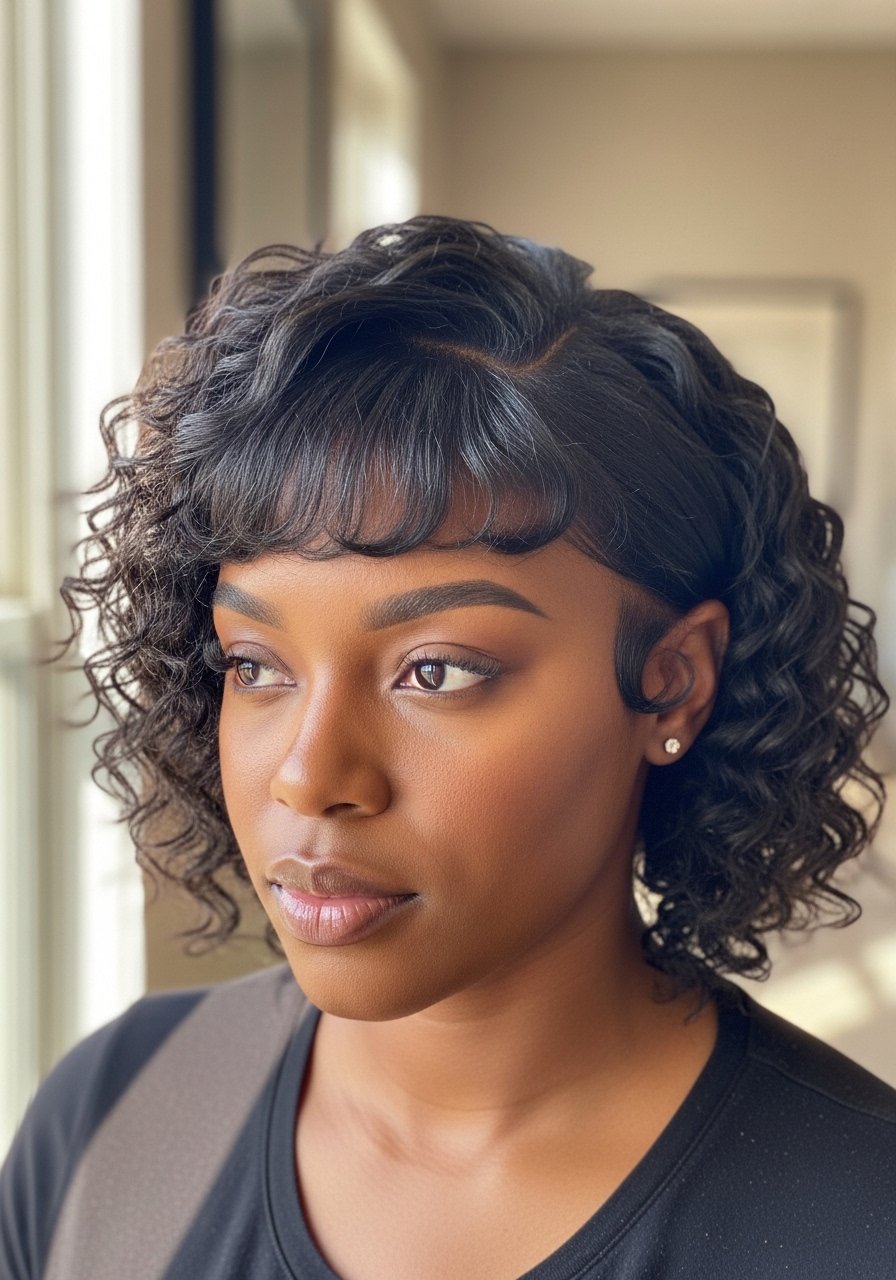
If you avoid heat, you can still get a polished bob. I section hair into 10 small parts and use foam flexi rods on damp hair, leaving them overnight. In the morning I separate gently and shape the bangs with a small finger-coil technique and a pea-size of curl cream to define the edges. The common frustration here is uneven shrinkage. Solve that by sleeping with a satin scarf tied loosely at the nape for one week while the new shape sets. This method takes longer up front but cuts styling time during the week.
Layered Bob With Bangs For Low Porosity Hair
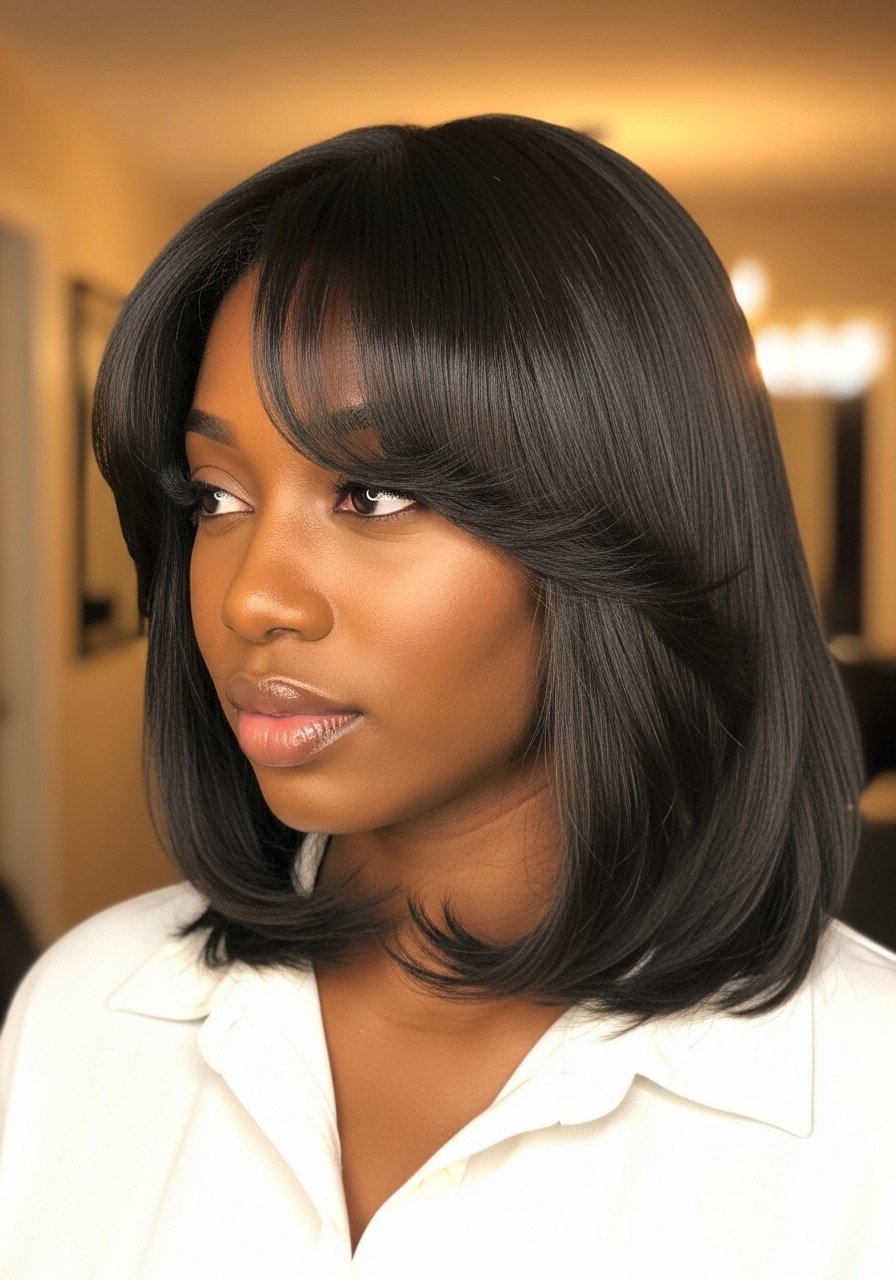
Low porosity hair resists moisture so product sits on top. I warm my leave-in in my hands before applying, then use a warm towel over the head for five minutes to help absorption. For layers, I keep them longer so the hair does not look puffy. Apply products with the 80/20 rule, focusing 80 percent on mid-lengths and ends and 20 percent at the root to avoid weighing down the shape. If you are unsure about porosity, drop a clean strand in water. If it floats for four minutes, it is likely low porosity.
Color-Blocked Money Piece Bob With Short Bangs

Money pieces frame the face and draw attention to bangs. I ask for two-inch panels at the front placed strategically to complement my skin tone. If you plan to DIY, use a demi-permanent dye for softer regrowth lines and patch test for allergies. Color care tip, use a color-safe sulfate-free shampoo in 8oz size and limit heat to keep the tone from fading. A common mistake is overdoing highlights, which makes regrowth stark. Salon touch-ups every 8 to 12 weeks keep the face framing fresh without constant upkeep.
Razor-Cut Bob With Feathered Bangs For Medium Density
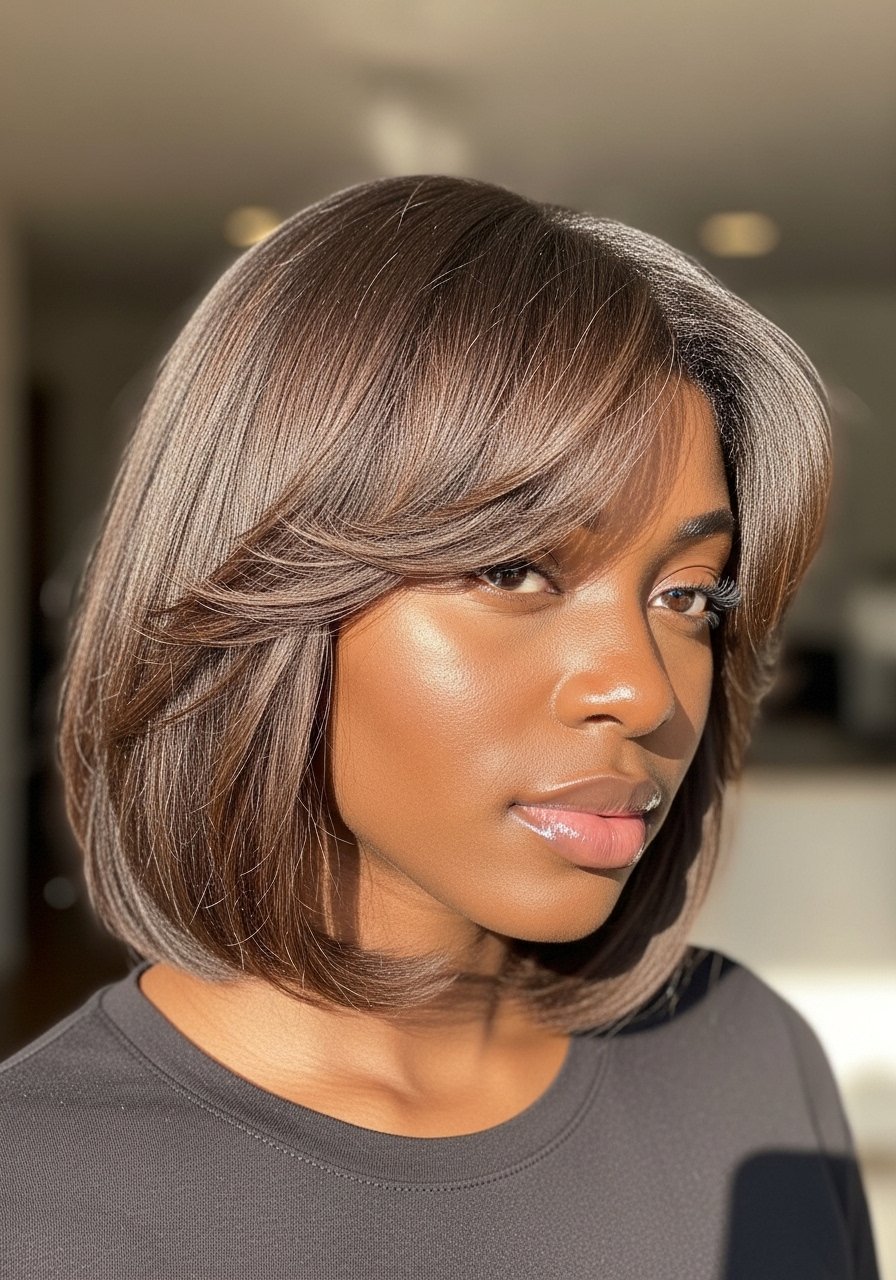
Razor cutting creates a lived-in edge that is low maintenance if done correctly. For medium density hair, feathered bangs soften a square jaw. If your stylist suggests too much internal thinning, push back. The right amount of texturizing is thin slices, about 3 to 4 per section, not broad strokes. I refresh this look at home with a quarter pump of styling cream on damp hair and a one-inch round brush drying in short bursts. Be careful if you have scalp sensitivity, razor work can feel rough. Ask for a patch test or to start gentler.
Choppy Bob With Wispy Blunt Bangs For Thick Fine Hybrid Hair
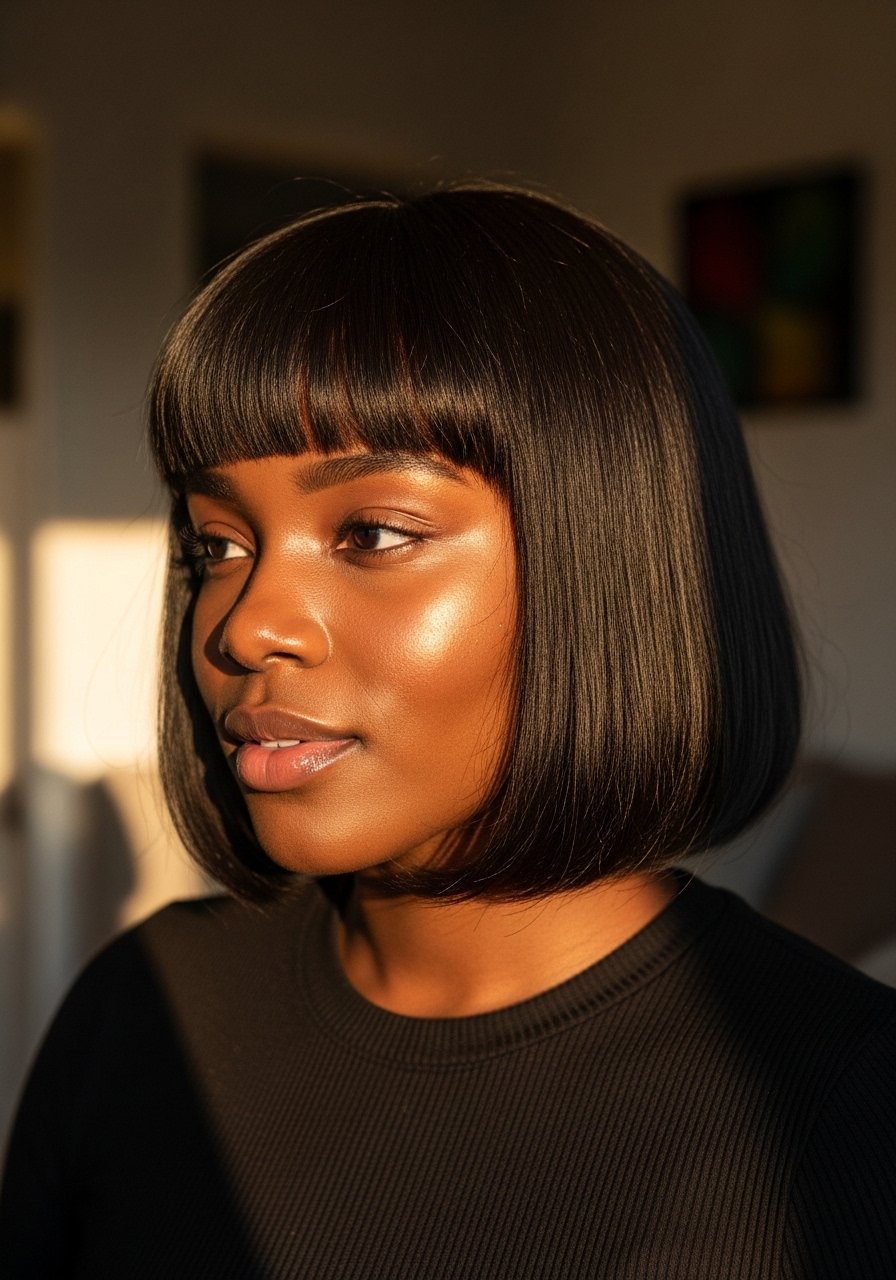
Some hair behaves thick at the root and fine at the ends. A choppy bob balances that by taking weight from the top while keeping length where hair is thin. I section hair into 4 primary quadrants for styling, and apply a tiny drop of oil to the ends only to keep them from looking straw-like. If you rely on one heavy mousse, your ends will still frizz. Swap that dated heavy-mousse habit for a light foam at the roots and a cream at the ends. Salon vs DIY note, initial shaping is worth a pro, but trims you can learn to touch up if you follow the angle.
What I Wish My Stylist Had Said About Bobs And Bangs
- Ask for dry cutting for curl patterns and shrinkage, especially on 3B to 4C textures.
- Heat protectant belongs on damp or just-dried hair before any iron over 300F. I learned this the hard way.
- If you color your bangs, do a patch test and budget for touch-ups every 8 to 12 weeks.
- Trim bangs dry, cut a quarter inch, then live with them a day and trim again.
- Bond builders help the look of split ends but do not actually undo past breakage. Olaplex No. 3 hair perfector or a salon-strength alternative once a week is worth the cost for damage control.
Frequently Asked Questions
Q: Can a bob with bangs work on 4C hair?
A: Yes, with the right cut and maintenance. A stacked or textured bob shaped dry will respect your curl shrinkage and give a clear silhouette. Avoid heavy layers at the crown. Night protection with a satin scarf and occasional no-heat defining methods will keep the shape without daily flat ironing.
Q: How often should I trim bangs on a bob to keep the shape?
A: Every 4 to 8 weeks depending on growth rate and how precise you want the line. If you prefer less maintenance, ask your stylist for longer wispy bangs that can be trimmed at home in small 1/4 inch snips between salon visits.
Q: Is it safe to bleach or highlight bangs at home?
A: Lifting over previous color is risky and can cause breakage. Do not attempt heavy lifting at home. For subtle face-framing highlights, a demi-permanent color or a stylist visit is safer. Always do an allergy patch test for any dye.
Q: How do I stop bang oil from ruining my bob?
A: Spot wash the fringe or use a dry shampoo stick in the morning. Also try applying products mainly to mid-lengths and ends, keeping the 80/20 placement in mind. If bangs get greasy very fast, consider a longer fringe that tucks behind the ear.
Q: Can I switch from gel-only routines to creams for my bob with bangs?
A: If your curls collapse midday on a gel-only routine, add a leave-in cream underneath, then a light gel for hold. That layering, similar to the LOC method, gives moisture and structure. It fixed my second-day curl slump after I stopped assuming more gel was the answer.
Q: Are bond builders necessary for bobs with bangs?
A: Bond builders help strengthen fragile hair and smooth the appearance of ends but they do not reverse damage. Use them weekly if your hair has been bleached or over-processed, and buy from authorized sellers on Amazon or Sephora to avoid counterfeits.