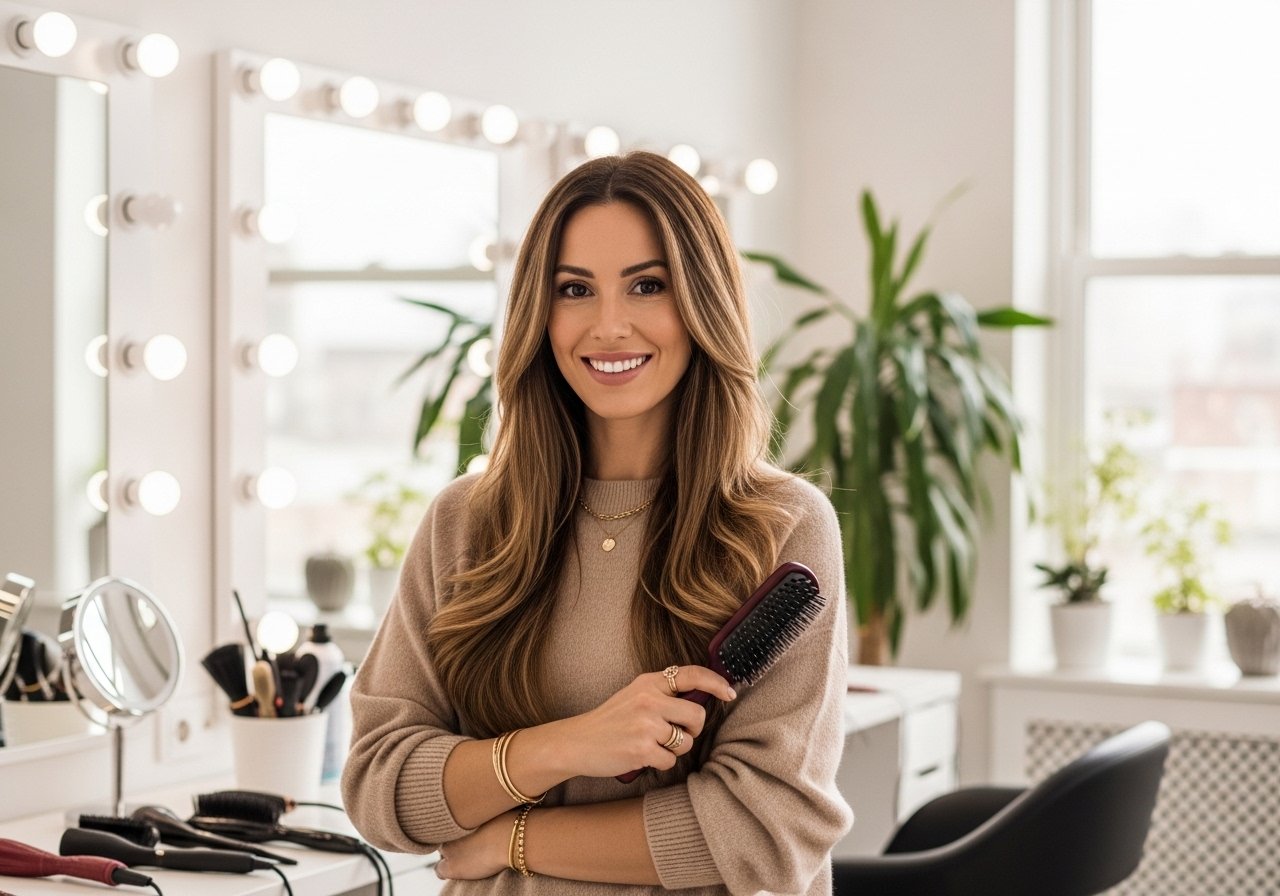
I ruined my first attempt by reaching for the reddest toner I could find, thinking cooler would come later. It did not. Everything went muddy and orange, and I learned the hard way that cool blond needs planning, not panic. After three tries and a salon rescue, I settled into a method that preserves hair health and gives that soft, smoky ash without the brass.
Context and who this fits: If your skin reads cool, with blue or pink undertones, this approach will look natural. It works across four hair textures I have styled, though very dark hair takes extra sessions. Expect 2 to 3 hours for a salon-level session or a careful at-home attempt spread over two days. If bleach or developer is involved, consider a professional if you are uncertain about lifting multiple levels.
What You'll Need
Styling Products:
- Lightweight heat protectant spray (~$8-18)
- Purple shampoo (~$10-25)
Tools:
- Tint bowl and brush set (~$6-12)
- Nitrile gloves (~$8-15)
Treatments & Prep:
- Bond-building treatment (~$12-30)
- Clarifying shampoo (~$8-18)
- 10 or 20 volume developer (~$6-14)
Step 1: Check base level and porosity first
Listen for the shift in texture when you wet a small section. Porosity tells you everything. If hair soaks up water fast it is porous and will pull tone quicker and unevenly. I tested this by misting strands and watching the water sink in, then adjusted timing. For low porosity hair, add 10 minutes to processing and use 20 volume developer. For porous hair, dilute the developer slightly and work in shorter bursts, 5 to 10 minutes, watching lift every few minutes. This prevents patchy ash and overprocessing.
Mistake to Avoid: Skipping a porosity check before bleaching

Step 2: Prep hair with one clarifying wash and a bond treatment
Pull everything off the shelf. Yes, everything. Start with a clarifying shampoo to remove buildup, then towel-dry and apply a bond-building treatment for 5 to 10 minutes. I almost skipped this and paid for it in uneven lift. The bond builder gives a slick, slightly tacky feel that protects during lightening. After rinsing, let hair rest for at least 30 minutes if you can, or style the next day. Across my real attempts, that rest day saved me from brittle ends.
Mistake to Avoid: Applying bleach to product-coated hair without clarifying first
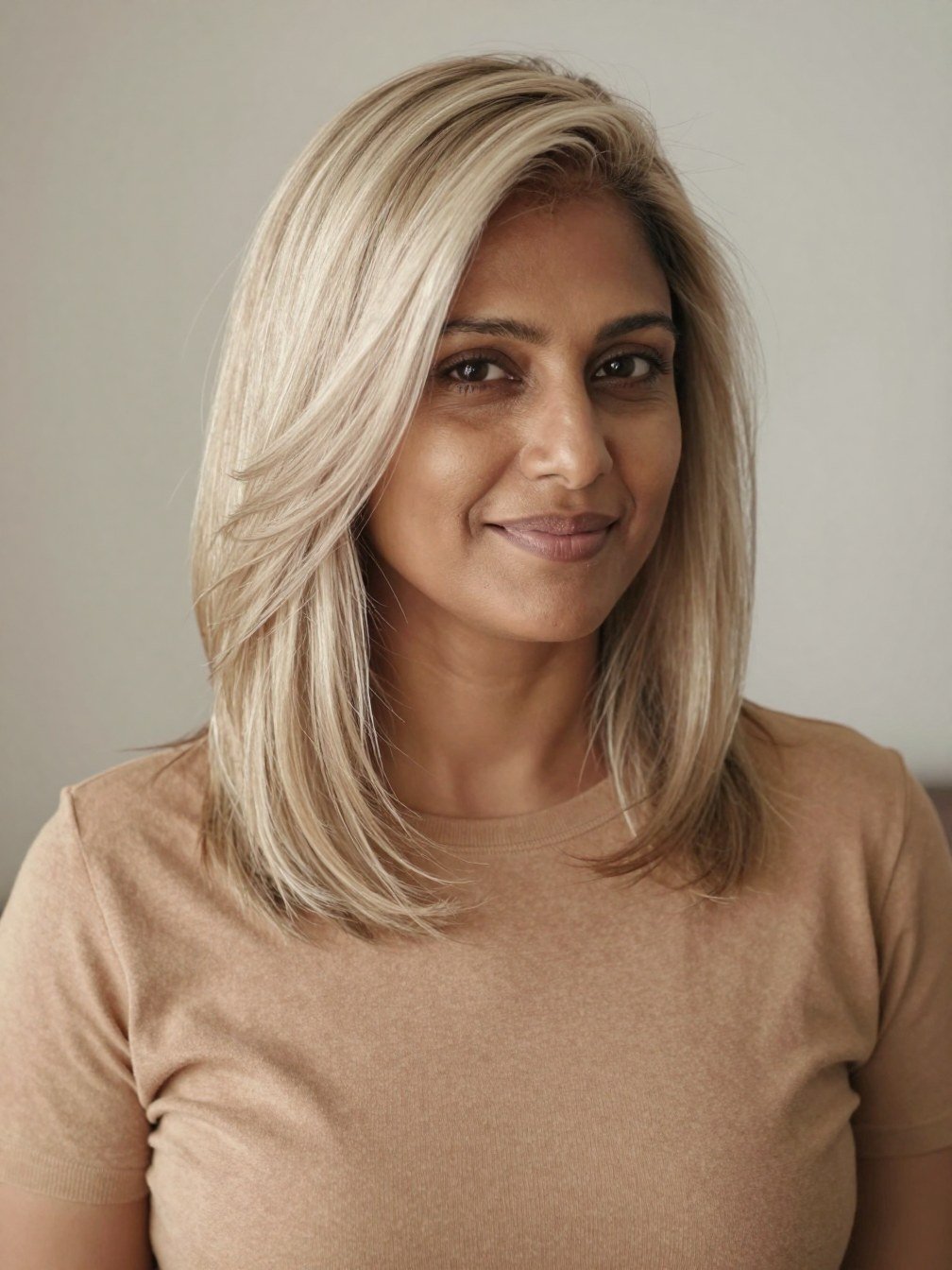
Step 3: Lighten to the right level, not the highest number
You want to lift to a pale yellow, roughly level 9 to 10, not ghost white. I used a mix that worked: for subtle lift on medium hair, 1 part bleach powder to 2 parts 20 volume developer, working in 1-inch sections. Process 25 to 40 minutes depending on porosity, checking every 5 minutes after the first 20. If you see warm orange, stop and rinse; you can tone the rest. For stubborn dark hair, do two sessions spaced two weeks apart to protect integrity.
Mistake to Avoid: Using 30 volume on the first pass for dark hair
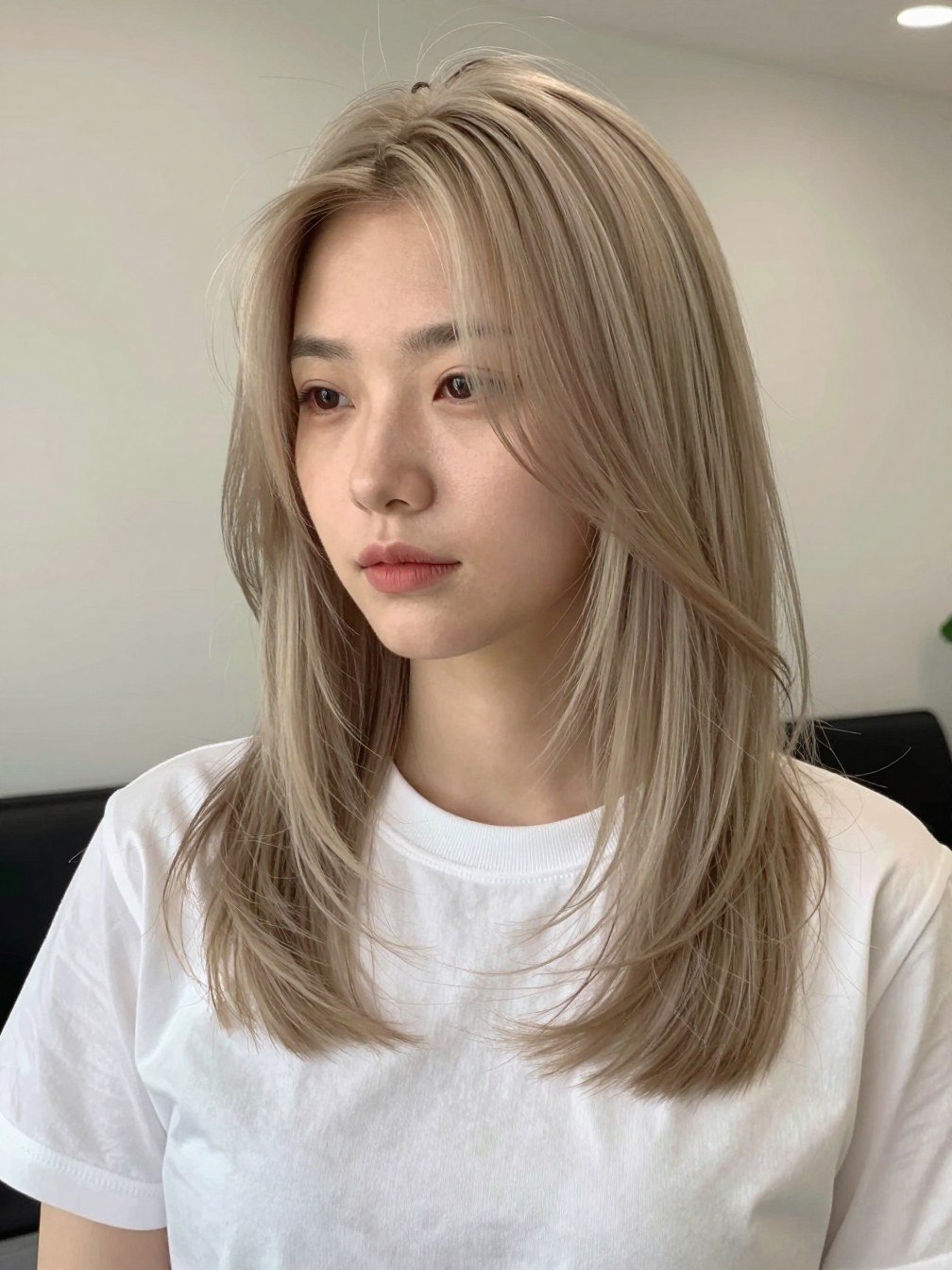
Step 4: Tone with a cool violet toner, measured and timed
The principle here is the color wheel, opposites neutralize each other. For ash, use a violet-based toner. I mix toner to developer at a 1:2 ratio and start with 5 to 10 minutes, checking every 2 minutes. On lifted pale yellow, a 10-minute toner gives a soft ash. If you leave it too long, the hair can read purple on camera. For a gentler route, dilute toner with a conditioner and leave for 7 to 15 minutes for low-key toning without heat.
Mistake to Avoid: Leaving an untested toner on for the full labeled time without strand checks
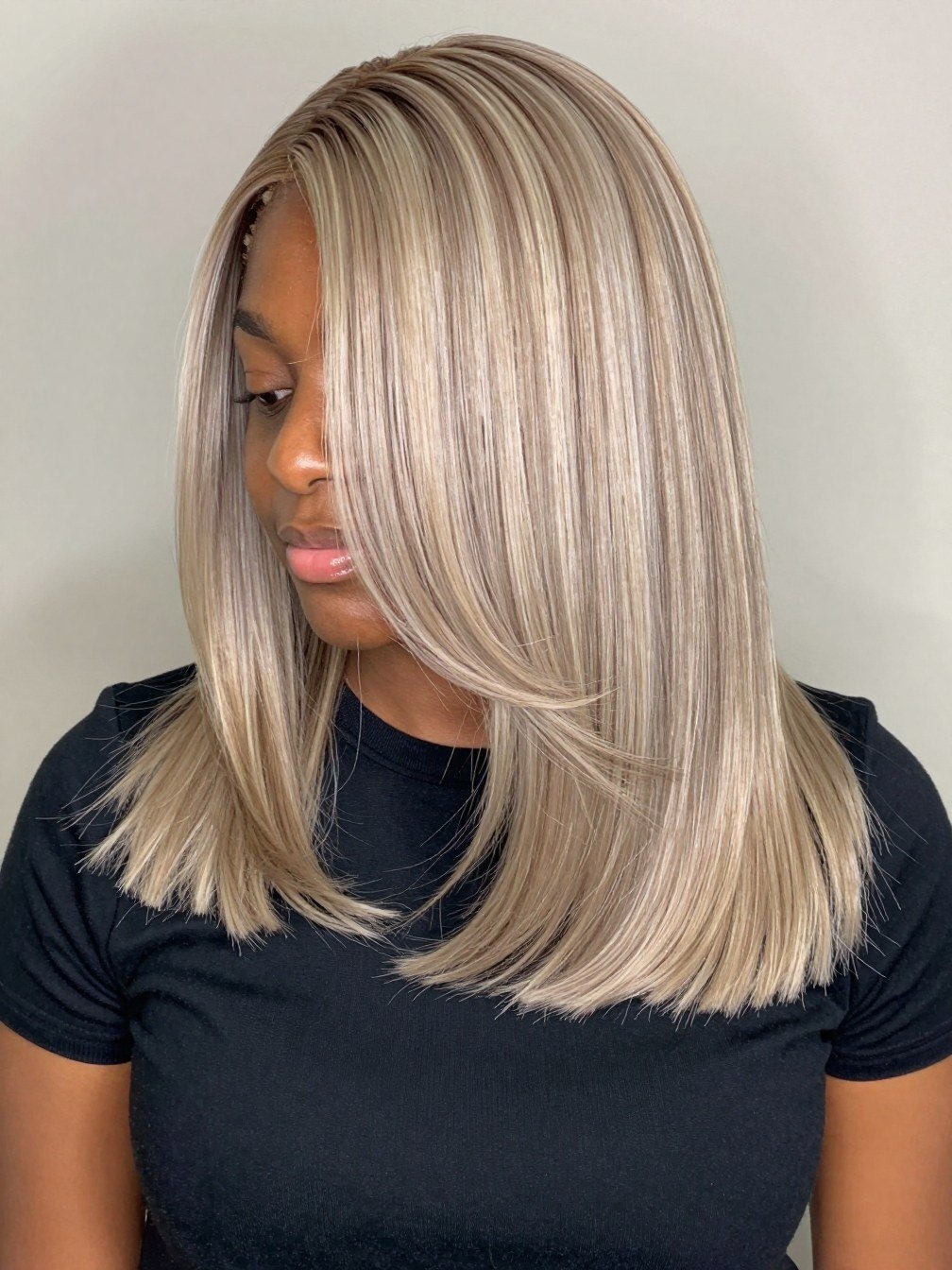
Step 5: Post-tone care, cooling and neutralizing
This part feels wrong while you are doing it. After rinsing toner, use a cool water rinse to help close the cuticle and lock the tone. Follow with a deep conditioning mask for 10 to 20 minutes and a final cool rinse. I noticed the shade settled into a soft, cool metallic sheen after the cool rinse, not before. If ends still feel dry, apply a small amount of leave-in oil only to tips so the roots stay airy.
Mistake to Avoid: Skipping the cool rinse and conditioning after toning

Step 6: Maintain with a purple shampoo routine and heat protection
This is where the day-to-day wins happen. Use a purple shampoo once to twice weekly, leave it on 2 to 5 minutes depending on strength, then immediately follow with a nourishing conditioner. I alternate a lightweight bond-maintaining conditioner after about fifteen washes to keep structure. When styling, always use a heat protectant and a low-to-medium heat setting, and aim for a fast pass rather than slow repeated strokes. Heat-free styling like overnight braids also helps color longevity.
Mistake to Avoid: Overusing purple shampoo every wash
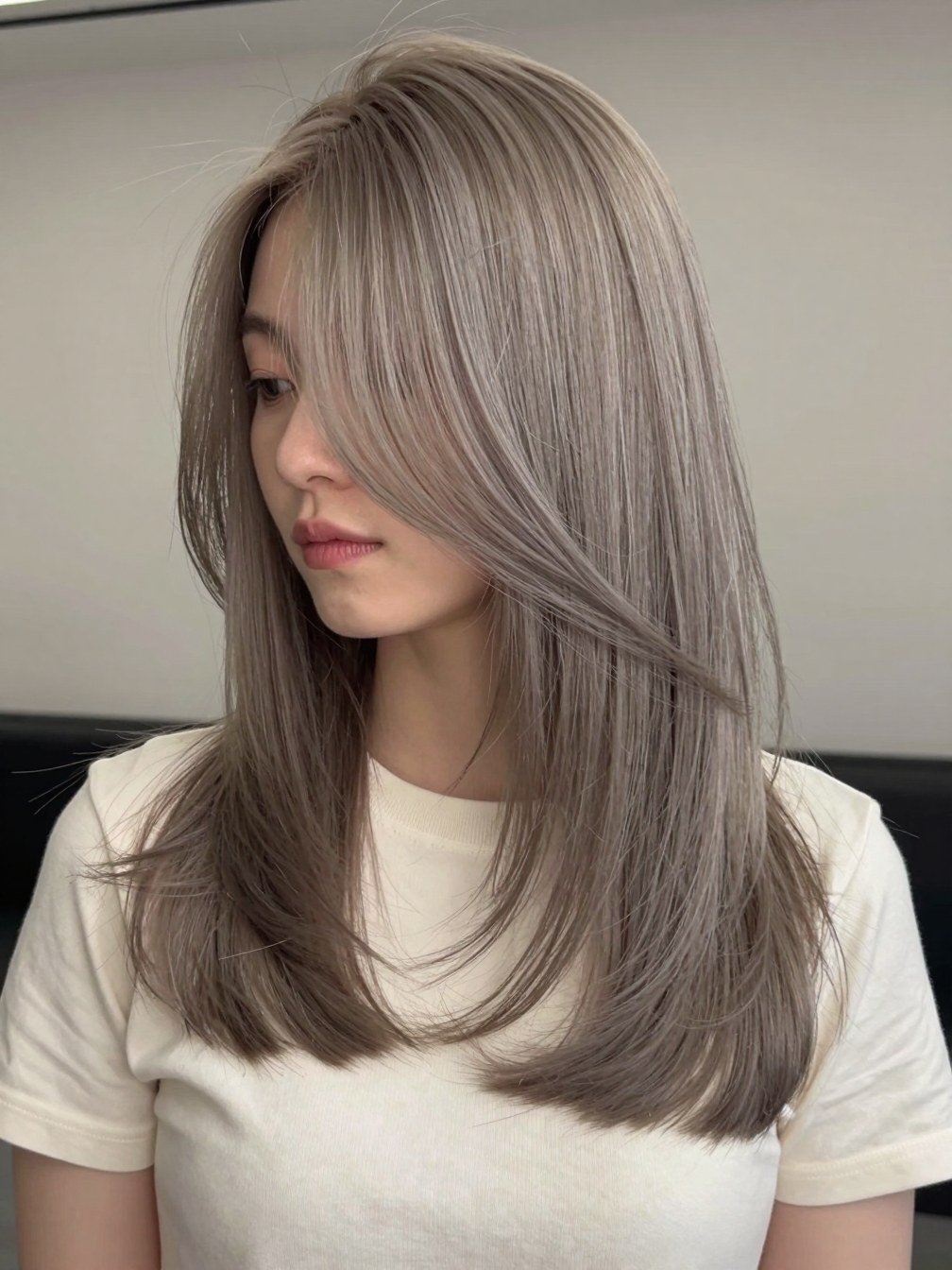
Keeping Cool Color
Tip 1: Use a diluted toner for subtle maintenance. Mix a drop of toner with 2 parts conditioner and leave for 7 to 10 minutes, then rinse. This slowly nudges brass away without a full salon toner. Find a color-safe conditioner here.
Tip 2: For porosity balance, alternate deep conditioning masks with a protein treatment every 6 to 8 weeks. Try a bond builder here.
Tip 3: Swap heavy oils for a lightweight leave-in on roots. Use an oil only on ends to avoid limp roots. Heat protectant options are here: lightweight heat protectant spray.
Tip 4: If you want a heat-free gloss, try a vinegar rinse diluted 1 part apple cider to 4 parts water after conditioning, then cool rinse. It tightens cuticle and adds sheen. Apple cider rinse tools and bottles here: spray bottle.
Tip 5: Keep a travel-size purple shampoo for quick touch-ups after sweaty workouts. Look for compact sizes here.
Tip 6: For low porosity hair, hand-warm your developer for a few seconds to help processing, but never microwave. Developer and mixing bowls are here: tint-bowl-and-brush-set.
Tip 7: If you are unsure about lightening more than three levels, book a consultation. A salon can do a strand test and show the expected lift.
Try It Night
I am still not sure this is the absolute best approach, but it has worked every time for me, and I got the soft, cool ash I wanted without crunchy ends. Start slow, use measurements: 1:2 toner to developer, 25 to 40 minutes for the initial lift depending on porosity. Small adjustments and strand tests make the difference. Enjoy the process and you will get the shade to match your cool skin tones.