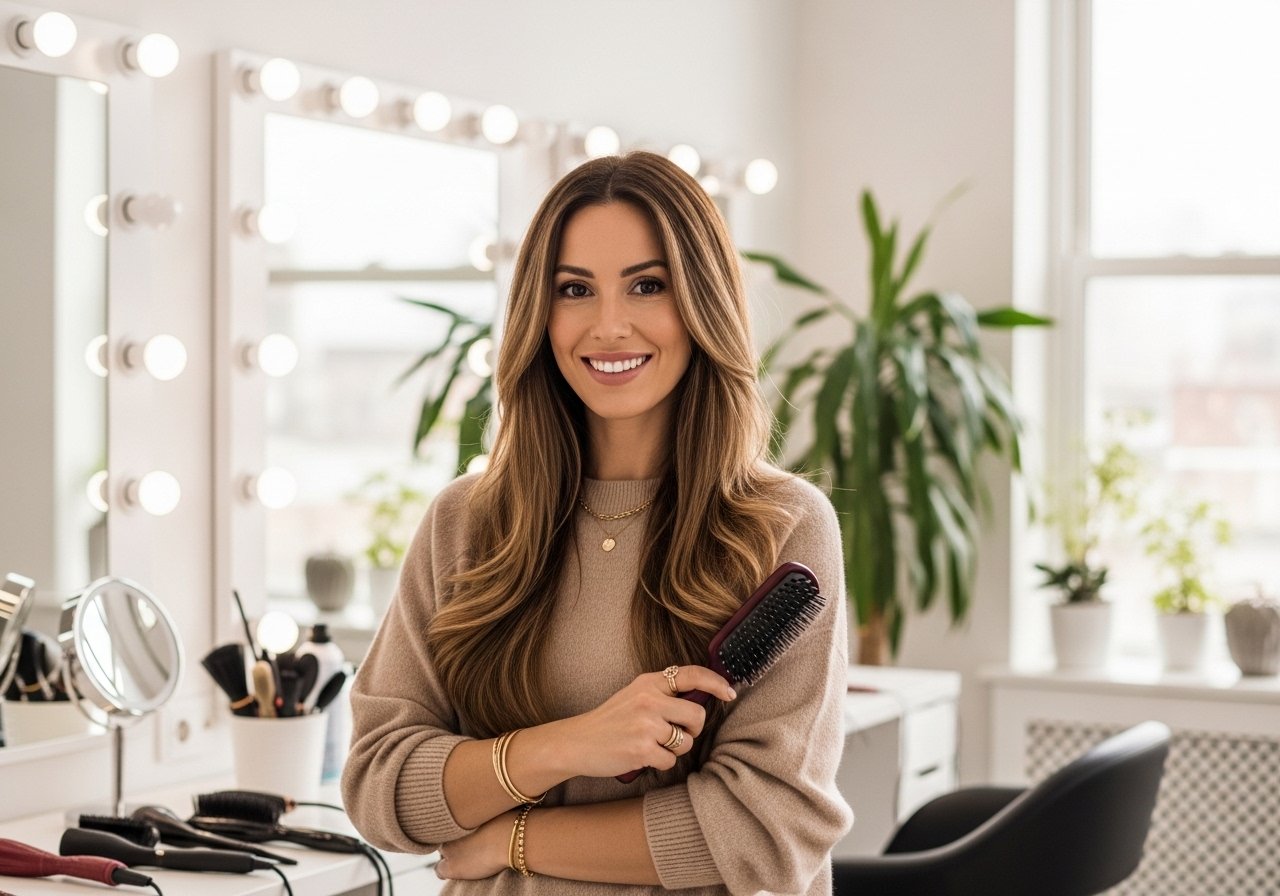
I tried the obvious thing first, and it made the whole head look flat and muddy. I had asked for cool ash, sat through a long toner, and by the next wash the warmth crept back. What fixed it for me was a plan: root shadow first, thin painted sections, then an ash gloss that sits for about 30 minutes on the warmest bits. I learned this across four hair textures I have styled, and honestly it took a few tries to trust the order.
This look fits naturally lightened or already light hair best. It takes one long salon visit for the lift, then regular glossing and purple-shampoo upkeep. Timewise plan for 2 to 4 hours in the chair, and expect toning or a demi-gloss every 6 to 12 weeks if you want the cool finish to hold. After washing and restyling about fifteen times, I can tell you the gloss and the root depth are the things people notice first.
What You'll Need
Styling Products:
- Violet purple shampoo (~$10-25)
- Demi-permanent violet gloss (~$15-30)
- Heat protectant spray (~$8-20)
Tools:
- Balayage painting brush set (~$10-25)
- Fine-tooth tail comb (~$5-12)
- Blow dryer with nozzle (~$30-120)
Treatments & Prep:
- Bond builder additive (~$15-40)
- Purple conditioning mask (~$12-30)
Step 1: Explain your starting point clearly
Start by showing your natural base and any previous color. Say the current level if you know it, for example level 6, 7, or 8. If your hair is dark brown or black, tell the stylist you want a staged lift and a root shadow so they do thin 1/8 to 1/4-inch painted sections rather than big foils. The stylist should respond with a plan for how many sessions or whether a single session will be too much for your ends.
Mistake to Avoid: Do not say only "ashy" without mentioning your base level or your tolerance for multiple sessions.
Step 2: Ask for a root shadow plus painted mid-lengths
Describe the melt you want: keep the root a shade or two darker than the mids, and ask the stylist to paint the mid-lengths next. The order matters: shadow first, mids second, ends last. That root shadow will sit the longest during toner processing so it reads natural and hides regrowth. If you want a face-framing money piece, ask for thinner slices at the front painted lighter and processed slightly less time so they stay bright without frying.
Mistake to Avoid: Do not ask for full-head bleach if your goal is lived-in ash; it will create higher maintenance and more damage.

Step 3: Confirm the lightener and bond plan
If lift is needed, confirm the lightener strength and bond additive. For most bases aiming for an ash finish you will be working toward a level 8 to 9 blonde before toning. Ask for a bond builder blended into the lightener if your hair has previous color or feels porous. Agree that the stylist will work in thin sections on darker hair and use fresh product, because thin sections give even lift and prevent patchy warmth.
Mistake to Avoid: Do not let them re-bleach porous ends without a conditioning strategy; it makes the ends feel crunchy and overprocessed.
Step 4: Set expectations for toner timing and target shade
Tell them you want a cool direction, not icy white. Ask the stylist to use an ash or violet-based demi-gloss and to follow the processing order: leave toner on the warmest (root) area longest, then the mids, then the ends. A 30 minute processing window is common for toners, but the final call should come from checking the hair in the bowl. If you want a cool-beige instead of grey, ask to mix a beige base into the ash so your face does not read washed out.
Mistake to Avoid: Do not let the stylist over-tone the whole head for too long; longer toner time can drag the color darker and muddy the dimension.

Step 5: Talk through maintenance and product schedule
Ask how often to come back. For ash tones plan for a gloss refresh roughly every 6 to 12 weeks, and purple-shampoo use 1 to 2 times a week between visits. A demi-gloss appointment often uses a low-deposit formula and sometimes a 10 volume glaze for slight lift and tone. Discuss at-home conditioning and whether a purple conditioning mask should replace or supplement a purple shampoo for your porosity level.
Mistake to Avoid: Do not assume purple shampoo alone will keep ash from going warm; it maintains tone but cannot fix a poor lift.

Step 6: Adjust for texture and porosity
If your hair is curly, coily, or thick, tell the stylist up front that you expect longer lift times and smaller sections. For tighter curls expect more time and possibly staged sessions. Ask for a gloss that is hydrating and for post-color bond treatment. If you prefer a heat-free finish, request a cool air dry and a leave-in conditioner instead of a hot blowout. I used this adjustment after my second attempt and it saved the curl pattern while keeping the ash tone.
Mistake to Avoid: Do not expect the same timing or section size for dark, thick, or curly hair as you would for straight fine hair.

Keeping Ash Tone Longer
Schedule note: Book gloss refreshes every 6 to 12 weeks depending on how cool you want the finish, and plan trims at the same appointment to keep ends healthy. Demi-permanent gloss (~$15-30)
Purple shampoo use: Use purple shampoo once or twice weekly, and follow with a purple conditioning mask as needed for porosity. Purple conditioning mask (~$12-30)
At-home tone fix: If warmth appears between visits, a short 5-minute at-home purple mask can mute yellow, but only as a short-term fix. Purple mask (~$10-25)
Damage control: If ends feel dry after lightening, use a bond-builder treatment at home once a week and ask your stylist about in-salon Olaplex or similar protocols. Bond builder (~$15-40)
Face-tone check: Pick an ash that has a beige or warm-ash base if you have very cool skin so your face does not look washed out. Bring photos that show the skin in similar light to yours.
Own the Melt
This is the part where patience pays off. If you are starting from dark hair, plan staged lifts instead of one emergency session. Keep a record of how often you use purple shampoo and when you glossed last. The reward is a lived-in, cool balayage that moves with your hair and grows out softer. Trust the process, and tweak the mid-tone if you notice dullness after a few washes.