If your thick hair balloons the minute humidity hits and your go-to bun ends up looking like a haystack, this is for you. I style my own thick hair, have learned the hard way with one DIY color disaster, and now keep a handful of techniques that actually work in real life. These looks are for dense hair, roughly shoulder length and longer, aimed at people willing to spend five minutes to an hour depending on the style, and mostly doable at home without a salon for upkeep.
Layered Shag With Face-Framing Pieces For Thick Wavy Hair

A layered shag removes bulk while keeping weight where you want it, especially across thick 2B to 3A waves. The key is 3 to 4 graduated layers, not razor-thinning every section. Ask your stylist for internal thinning at the crown only, and keep longer layers around the face to avoid a triangular silhouette. Styling is 10 minutes: work two pea-sized pumps of a cream styling product into damp hair, then scrunch and diffuse on medium heat, about 300F on the iron if you touch up pieces. A common mistake is over-thinning the ends which makes thick hair poof. This is salon-time for the cut, but maintenance trims every 10 to 12 weeks keep the shape. For smoothing and definition, I mist a light hold spray like a salt-and-hold spray through mid-lengths.
Long Blunt Cut With Textured Ends For Thick Straight Hair
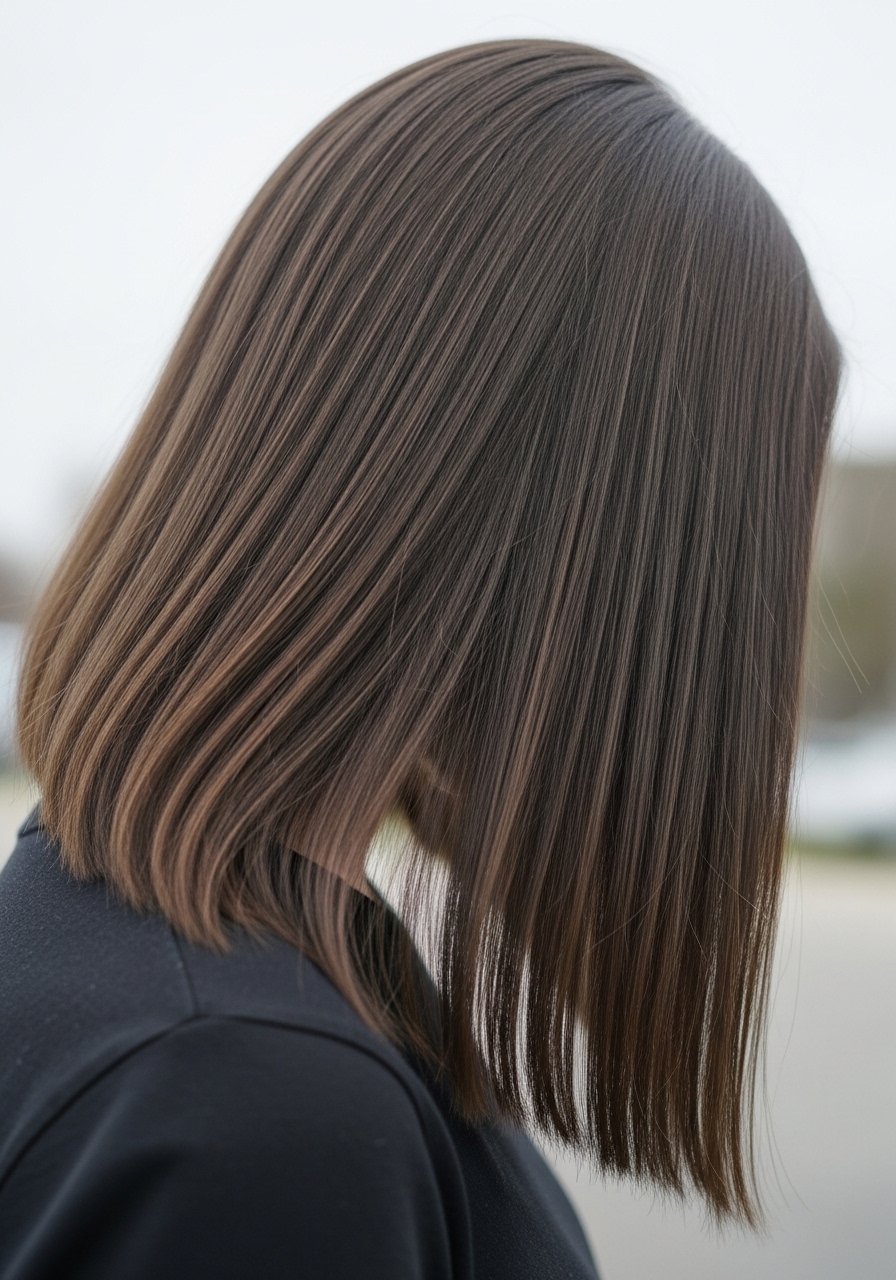
If your straight thick hair behaves like a sheet, a long blunt cut with micro-textured ends gives structure without adding weight. Ask for a clean, single-length baseline and for the stylist to texturize only the last 1 to 2 inches with point cutting. At home, keep it sleek by blow drying with a round brush and one to two passes of a flat iron at 340F on small 1-inch sections. Heat protectant must be used before any iron over 300F, so spray a light layer of heat protectant and let it dry for 30 seconds. People often talk themselves into heavy serums that grease the scalp. Instead, two drops of an oil worked just on the ends keeps the blunt line crisp. This is a salon cut with DIY upkeep.
Shoulder-Length Lob With Internal Thinning For Thick Wavy Hair

The lob is forgiving when thick hair is surgically de-bulked from the inside. Not all thinning is the same. Request 5 to 7 vertical internal point cuts per side, not chopping the exterior outline. It drops weight without losing the lob shape. On wash day, I apply a nickel-sized amount of leave-in cream on towel-damped hair and finger-comb into sections of about 1 inch to avoid overproduct. Diffuse on low heat, two minutes per side to settle the wave. A common frustration is needing a full day to look polished; this cut cuts styling time to 10 to 15 minutes. Salon visit for the initial cut, DIY trims are risky for the internal layers.
Curtain Bangs For Thick Hair Without the Forehead Gap
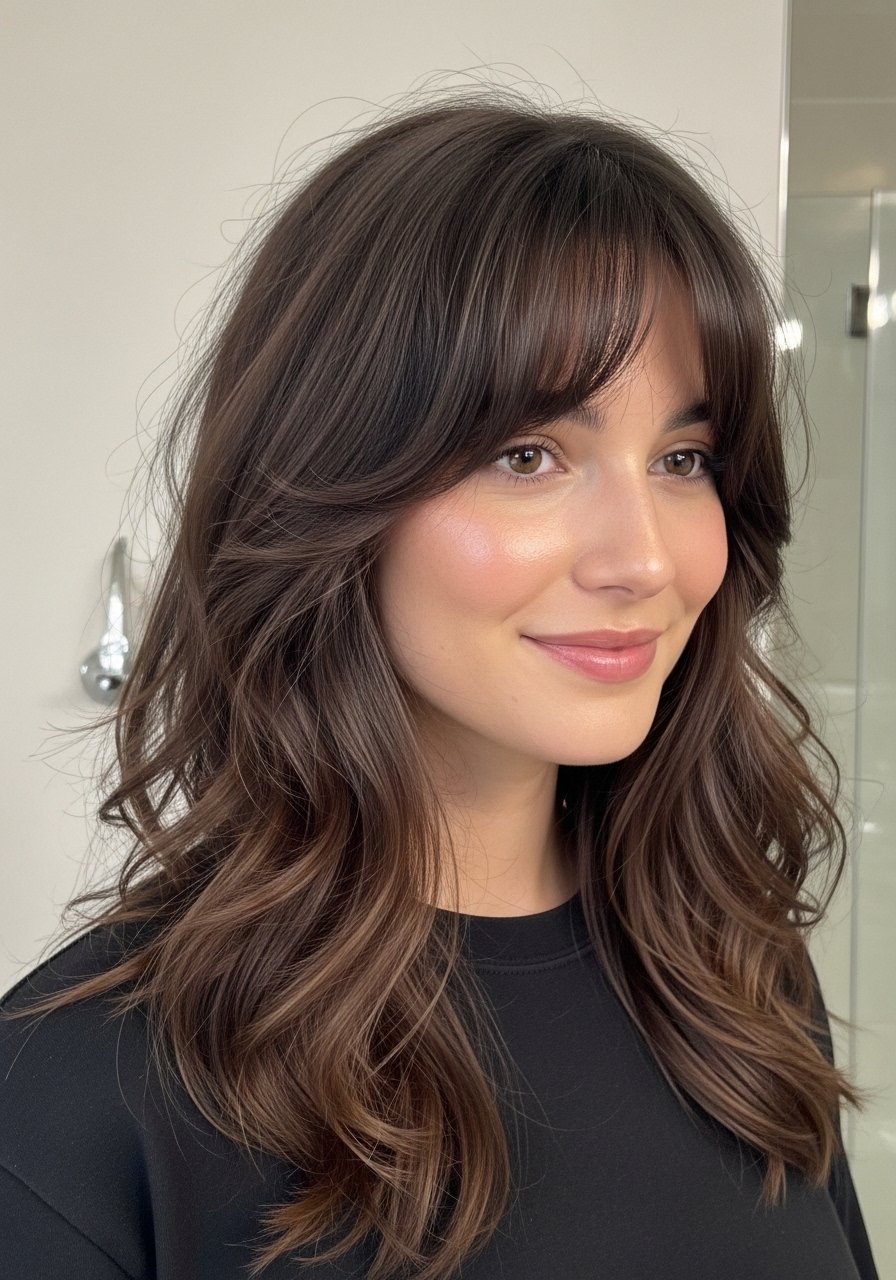
Curtain bangs on thick hair can puff if cut blunt. The trick is to angle the bangs into the rest of the hair and cut them slightly longer, about 1 to 1.5 inches beyond the brow when dry. For thick 2A to 3A hair, take the bangs in 5 small vertical sections and point-cut the ends to avoid a heavy curtain ridge. Blow dry with a round brush, directing the hair away from the part on each side, and use a dime-sized amount of styling cream to smooth the roots. A frequent mistake is trimming curtain bangs too short when wet. If you cut at home, trim in 1/4-inch increments with hair dry and shaped. Bangs are a DIY-friendly upkeep if you know the length you like.
Braided Half-Up With Volume For Thick Curly Or Wavy Hair
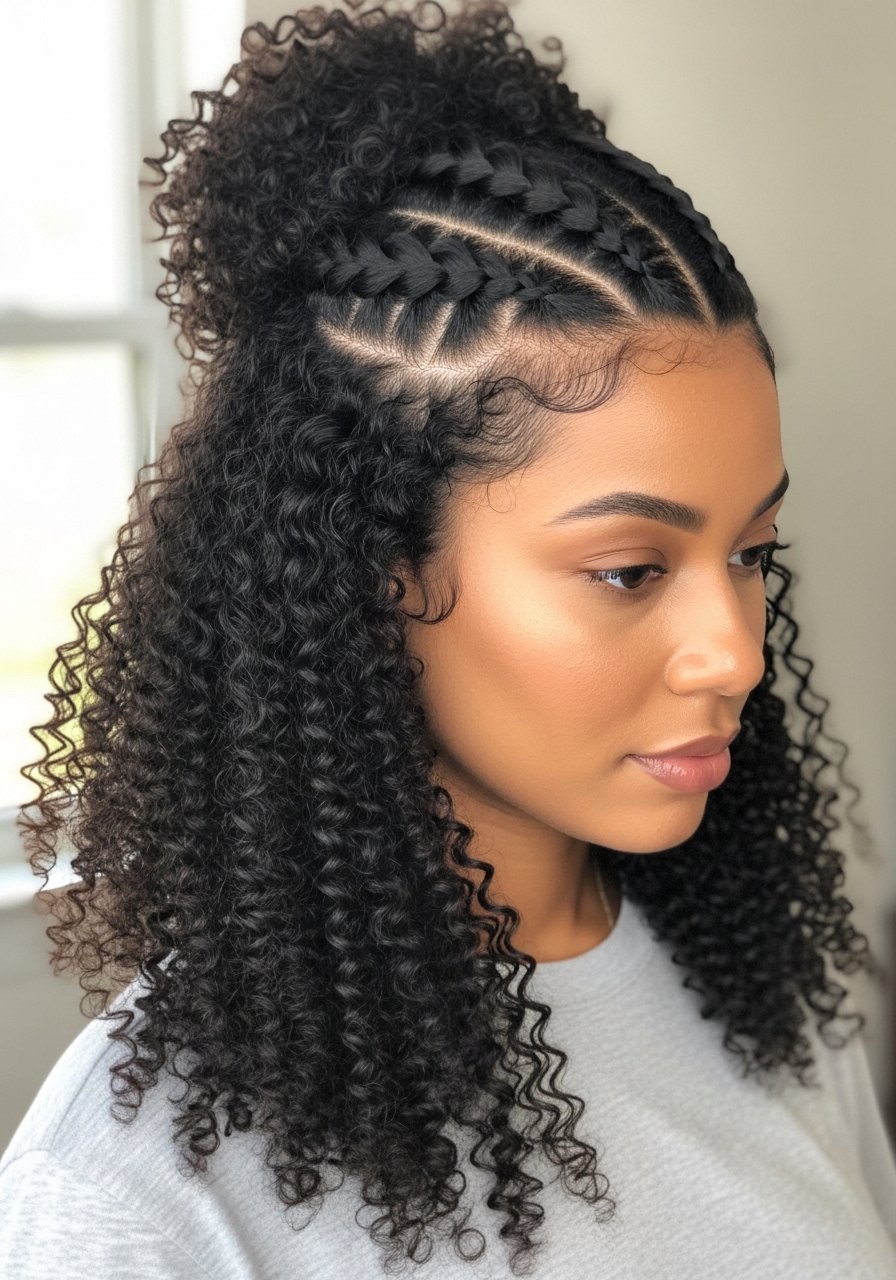
Braids tame the crown while leaving bulk in the lower sections for drama. I section the top third of the hair into two 1.5-inch wide panels, French braid each loosely and secure with small clear elastics. Pull gently at the braid sides to pancake them for volume, then pin across the back. This works great on thick 3A to 4A textures that need control without compressing curls. If your braid slips, add two bobby pins under each elastic. A mistake people make is braiding on soaking wet hair which stretches curls; aim for damp, not wet. This is fully DIY and takes about 8 minutes once you practice the sectioning.
Low Sleek Bun For Thick Hair With Smoothing Serum
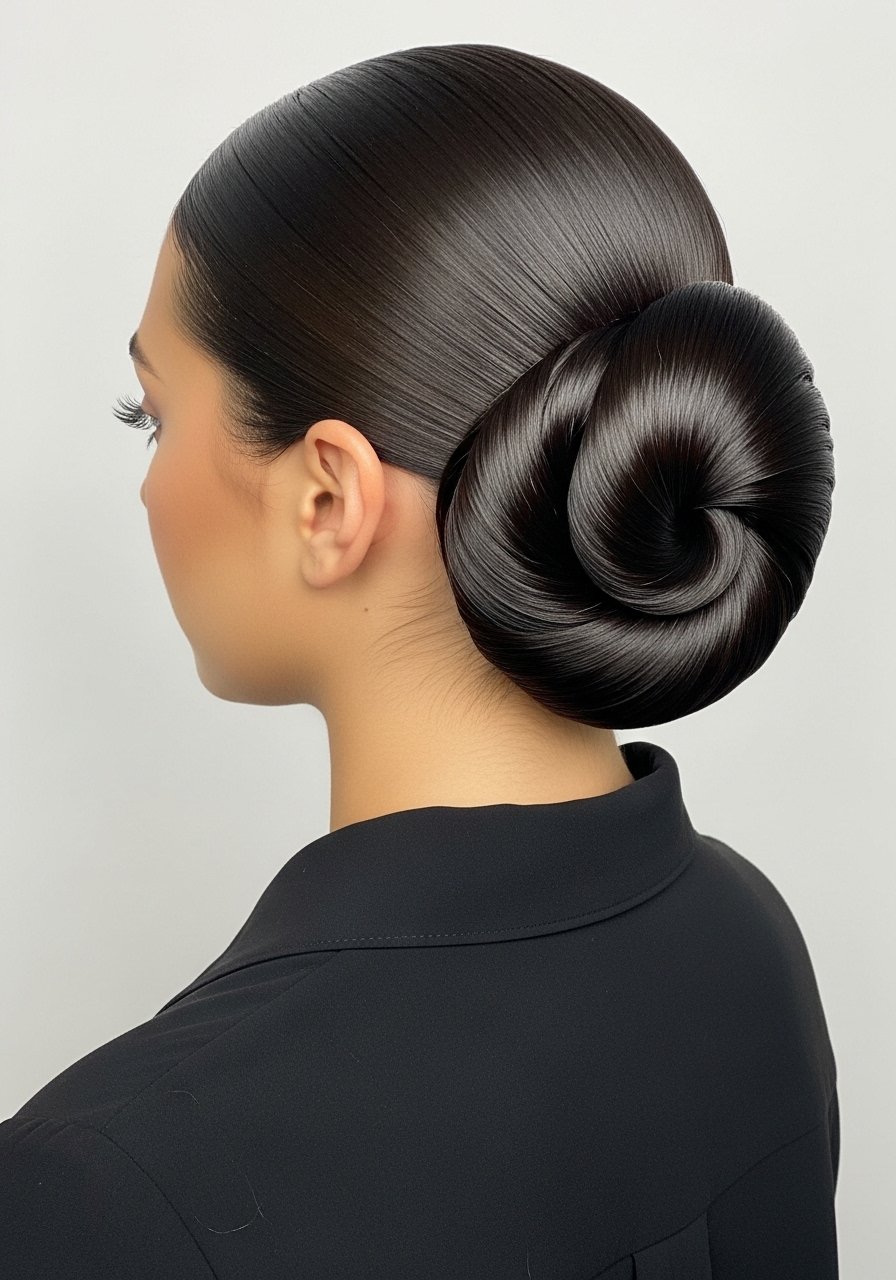
A low sleek bun keeps heavy hair controlled and looks polished without the bulk of a top knot. Start with damp hair, smooth a pea-sized amount of smoothing serum through the mid-lengths and ends, then brush back into a low pony. Use a boar bristle paddle brush to compress the halo, wrap hair into a coil and secure with pins. For very thick hair, make two ponytails stacked low to distribute tension and avoid a painful scalp. Heat protectant applies if you flat iron the roots first. Mist with a light-hold spray, not heavy products that make the bun slippy. This style is DIY and quick, but use strong pins rated for thick hair.
Rope Twist Ponytail That Holds For Thick Hair
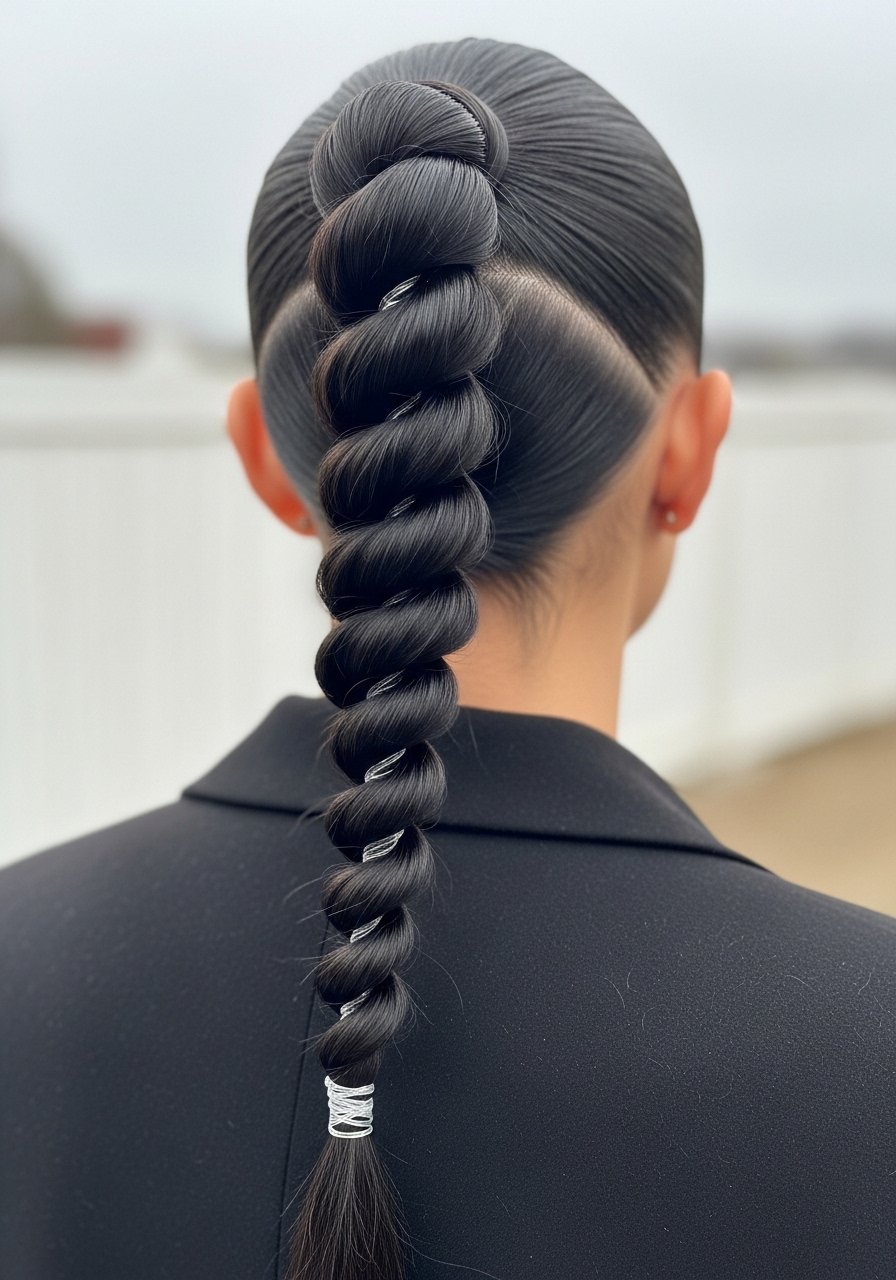
Rope twists last longer on thick hair because the density gives grip. Create a mid-height ponytail, split it into two equal sections and twist each one away from the face, then twist the two together toward the face. Secure with small elastics every 3 to 4 inches to keep the twist from unwrapping. Use a tiny drop of styling serum on the surface for shine, avoid applying to the scalp. This is great for long thick 1B to 3A hair when you need a polished look that survives commutes. Common frustration is the twist loosening by evening. Add two discreet bobby pins under the first elastic for security. This is easy to do at home in about 7 minutes.
What I Keep In My Thick Hair Styling Kit
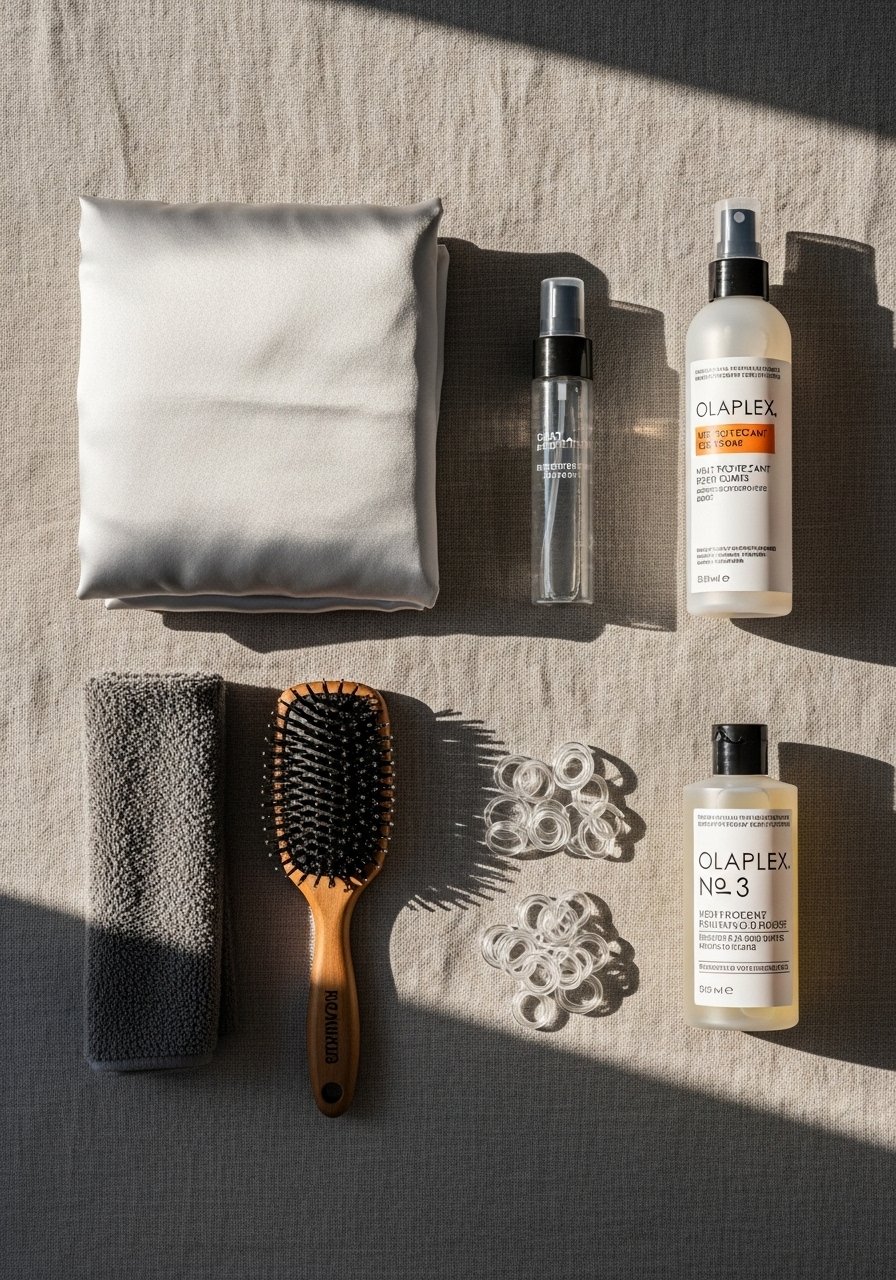
- Honestly the best $30 I spend each month, Olaplex No. 3 hair perfector used once a week healed and smoothed my over-processed ends. Buy from the official seller on Amazon or grab it at Sephora to avoid counterfeits.
- For detangling thick wet hair, a wide-tooth comb is non-negotiable.
- A silk pillowcase queen size cut my morning frizz in half.
- For styling, a boar bristle paddle brush helps distribute oils without shredding ends.
- For heat days, a heat protectant spray that can be applied to damp hair is worth it.
- Sleep-friendly hold comes from a pack of small clear elastics and a large microfiber hair towel.
Heatless Robe Tie Curls That Survive Thick Hair
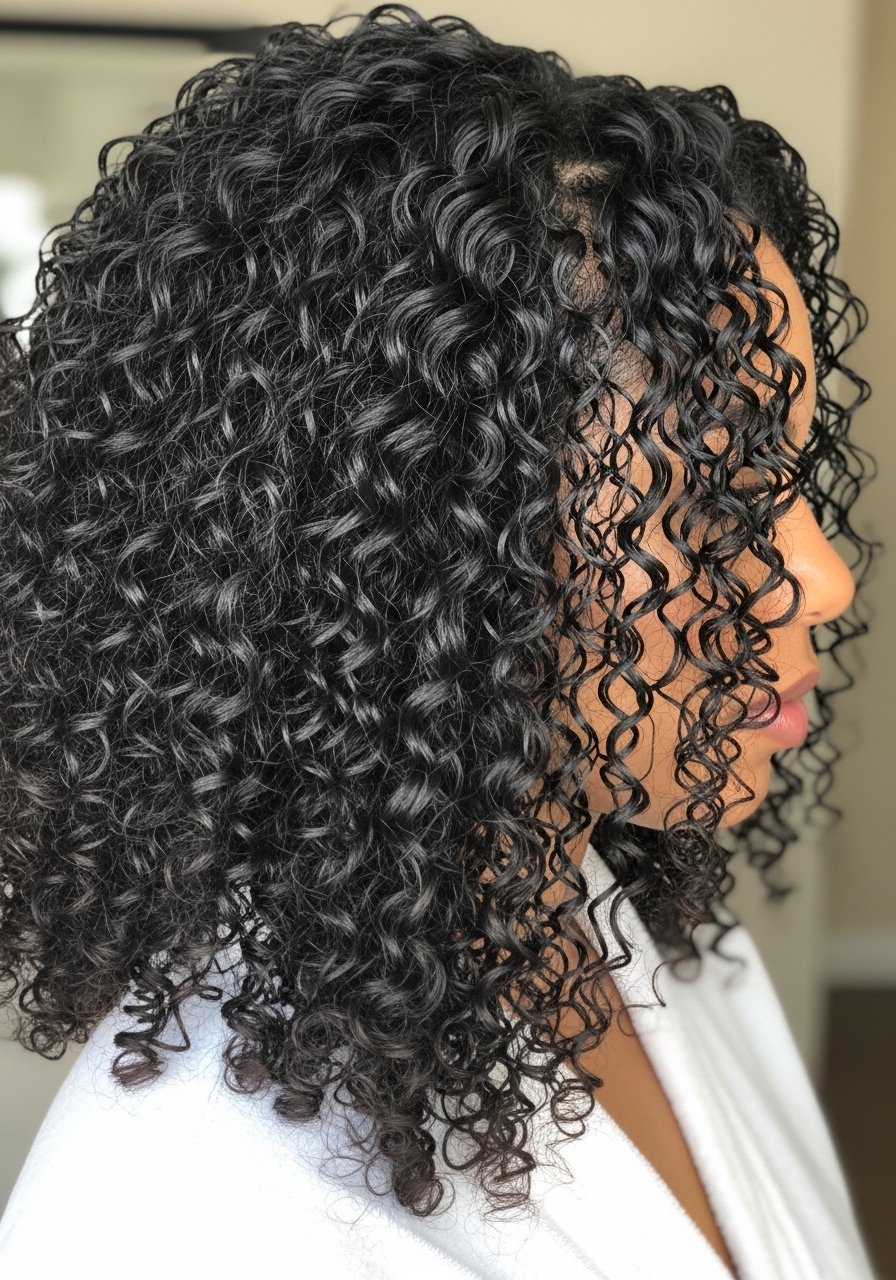
If you hate heat, the robe tie method is a lifesaver for thick curls. Divide hair into 8 to 12 sections depending on density, wrap each around the robe sash and pin. Sleep on it and release in the morning. Two extras that make it work: a light leave-in on damp hair before wrapping and a small spritz of curl refresher in the morning. My curls looked great on TikTok and like wet noodles by 11am. Finally figured out it was the gel-only routine. Added a leave-in cream underneath and it changed everything. Common mistake is wrapping hair while too wet which causes mildew smell. Let hair be damp not dripping. This is fully DIY and cuts styling time on busy mornings.
Stacked Bob For Thick Coarse Hair With Weight Control
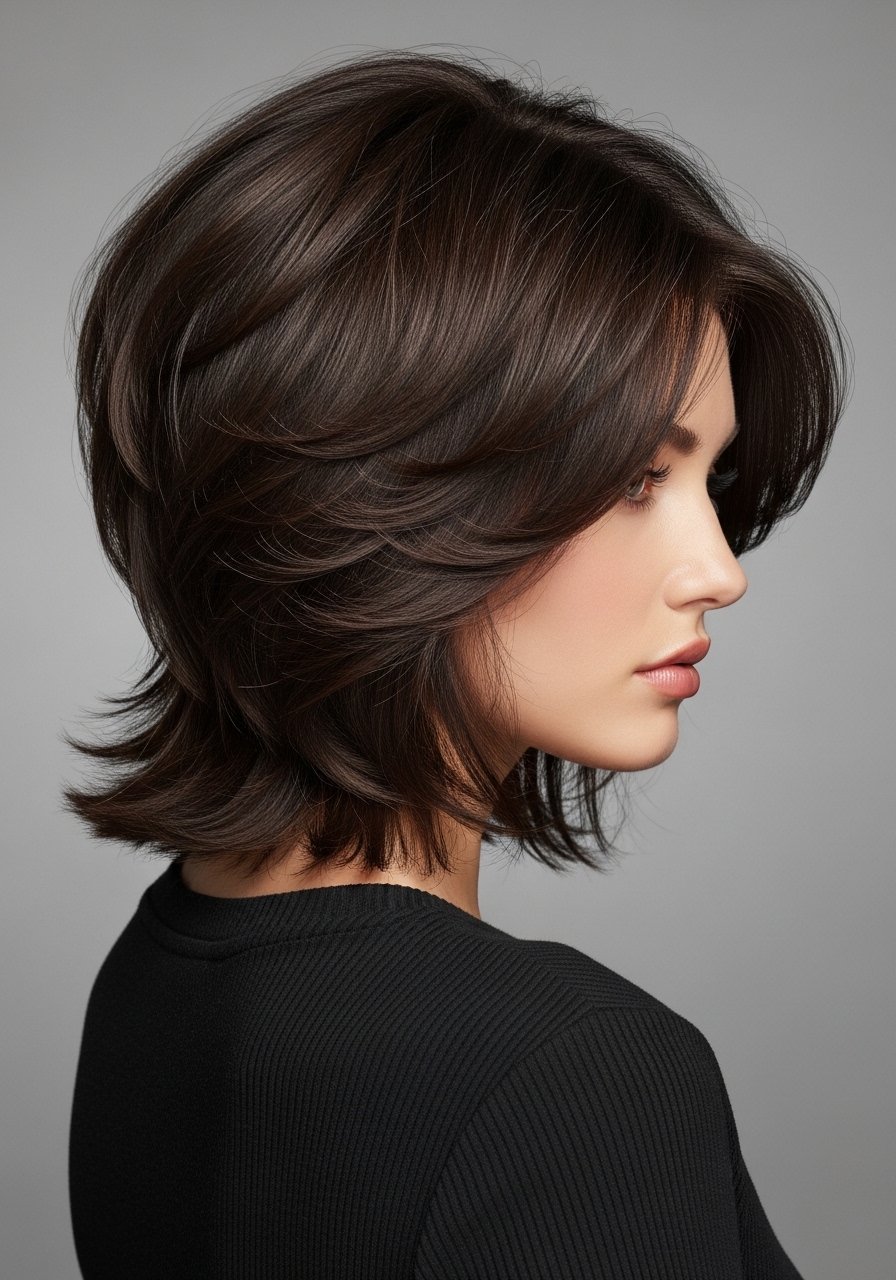
Thick coarse hair benefits from a stacked bob because the graduated back shortens bulk without thinning the front. Tell the stylist to blend the crown layers with horizontal point cutting and leave the perimeter blunt for weight. At home, a leave-in detangler applied in sections and a wide-tooth comb keeps the shape crisp. The lofted back may need smoothing every other wash with a cool blow dry attachment to lay the crown down. People worry a stacked bob will need daily styling. It does need regular trims every 8 to 10 weeks but daily styling can be 5 to 10 minutes. This cut is a salon expense for the initial shape with simple at-home maintenance.
Money Piece Face-Framing Highlights For Thick Hair You Can Touch Up
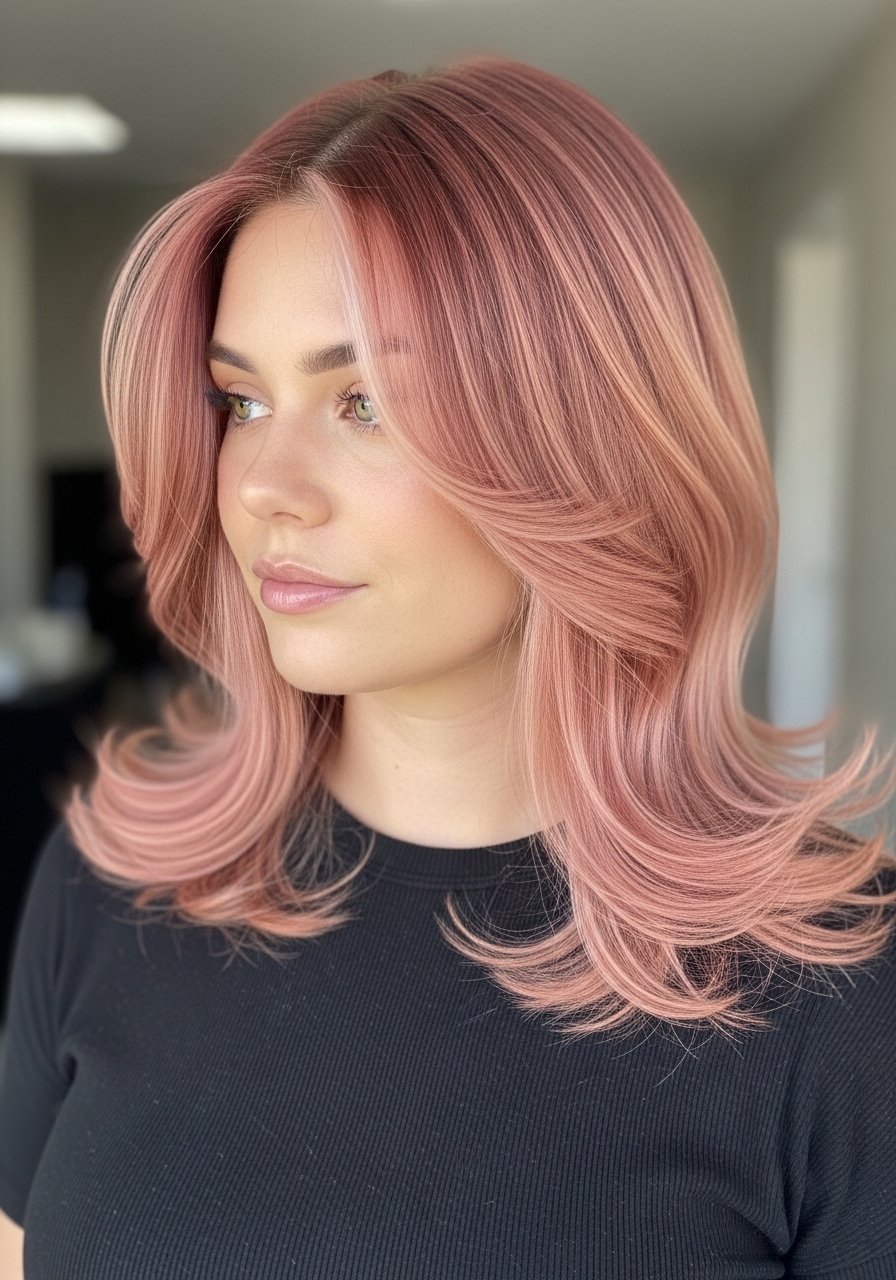
Money pieces lift a heavy, dense face shape and are deceptively easy to manage on thick hair. Because thick hair hides color, place the lighter pieces at the front in two 1-inch panels. If you do touch-ups at home, lighten only those narrow sections and be conservative with lift levels. Bleaching over previous color is risky. I bleached my own hair last winter trying to save $200. Three months later I paid $400 to fix it. Olaplex No. 3 saved what was left. If you plan to lighten, get a patch test for scalp sensitivity and consider a salon appointment for the first session to avoid breakage. Refresh the pieces every 8 to 12 weeks.
Half-Up Top Knot For Thick Hair That Doesn’t Fall Flat
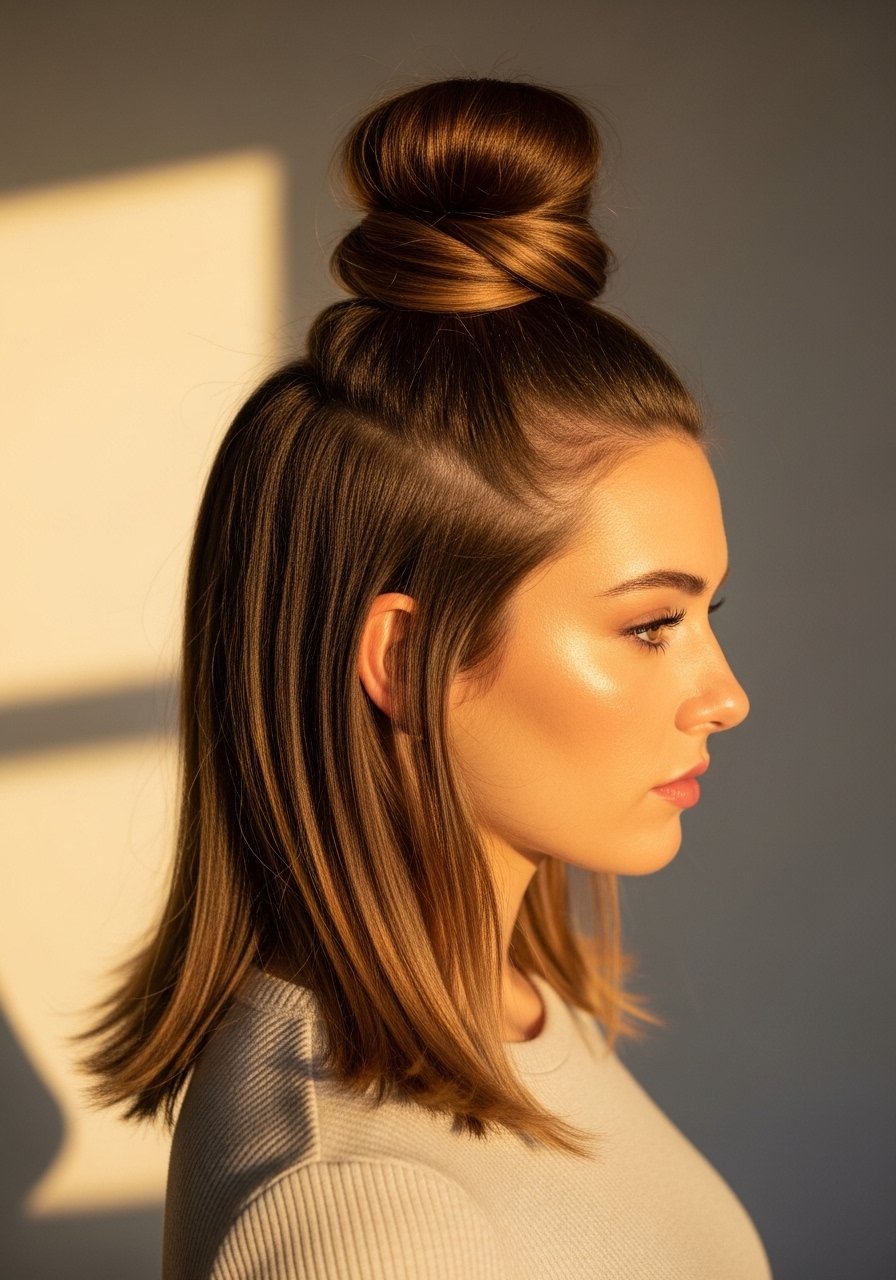
The half-up top knot is a go-to when you want enough hair out of your face without losing volume. Take the top 25 to 30 percent of your hair, smooth back with a brush and twist into a knot, securing with a donut or wrapped elastic covered by hair. Thick hair benefits from two small elastics stacked before looping to avoid slippage. Use a dab of styling paste on the hairline to control flyaways. A common mistake is grabbing too much hair which creates a heavy, droopy knot. Keep the knot size proportional to the remaining length and density. This is quick and perfect for a rushed morning.
What I Wish Someone Had Told Me About Styling Thick Hair
- Heat protectant goes on damp hair, not dry. The cuticle is more open and the product actually absorbs. A heat protectant spray that you mist and let sit 20 to 30 seconds before styling protects better than spraying right before the iron.
- Grab a microfiber hair towel for $12. It cuts your blow dry time by a third and stops the frizz before it starts.
- Hair grows about half an inch a month at most, regardless of supplements. The thing that helps length retention is reducing breakage with a silk pillowcase and weekly bond treatments.
- Spend less on gadgets and more on technique. Spent $300 on a Dyson Airwrap and used my $30 round brush more for the next year. Tools are wild that way. If you plan to style daily with a device, consider the splurge. If you style twice a week, a $30 brush and a decent hair dryer will do.
Frequently Asked Questions
Q: Can I use Olaplex No. 3 if my hair is not visibly damaged, or will it make it worse?
A: It will not make healthy hair worse. Using Olaplex No. 3 hair perfector once every one to two weeks on thick hair can reduce breakage by temporarily strengthening weak bonds. If your hair is healthy, treat it as maintenance, not a cure. Buy from the official seller on Amazon or at Sephora to avoid counterfeits.
Q: How often should I use purple shampoo on thick color-treated hair without drying it out?
A: Once a week is a safe starting point. If your hair feels dry after one use, stretch to every other week and always follow with a deep conditioner focused on mid-lengths to ends. Do not leave purple shampoo on longer than 3 to 5 minutes for thick hair prone to dryness.
Q: What is the difference between a leave-in and a curl cream, and do I need both?
A: A leave-in conditions and detangles, while a curl cream defines and adds light hold. On thick curly hair, use a small amount of leave-in on damp hair first, about a nickel to quarter size depending on density, then layer a dime-sized curl cream for definition. Many people skip the leave-in and blame the styling product when curls droop.
Q: Is the Dyson Airwrap worth it for thick hair, or are cheaper tools fine?
A: If you style daily and want time savings, the Dyson's airflow and heat control make a big difference for dense hair. If you style once or twice a week, a $30 round brush and a solid dryer will give similar results for much less. Also check Best Buy or the brand site for deals and to avoid counterfeits.
Q: Can I safely thin my thick hair at home to remove bulk?
A: Light internal thinning with thinning shears can be done at home only if you know what you are doing. The safer route is to have a stylist take out interior weight using vertical point cutting. Over-thinning at the perimeter causes the hair to puff. If you try at home, only remove small amounts and watch the shape as you go.
Q: Can I bleach my hair at home if I have previously dyed it darker?
A: Lifting bleach over previous color is the most common reason hair breaks off. This is a salon job for a reason. If you attempt it at home, accept it may require multiple sessions spaced weeks apart and bring professional bond builders into the plan. If you are committed to going lighter, book a color correction or consult a salon first.